
Sourdough Sorrows and Triumphs: Saving an Over-Proofed Loaf
Ah, the trials and tribulations of a sourdough enthusiast.
Picture this: I set out to turn my trusty crusty Italian loaf into a full sourdough version. The day slipped into evening, my kitchen hovered around a chilly 65°F, and I knew this bake was going to take longer than usual.
What I didn’t plan on was falling asleep.
When I finally wandered back into the kitchen, my heart sank. The dough was severely over-proofed—barely holding together, spreading instead of standing, and threatening to collapse at the slightest touch. I had come too far to accept defeat, but this was clearly heading toward sourdough disaster.
If you want a refresher on what went wrong here, these posts break it down:
Fermentation (the first rise)
Proofing (the second rise)
Rising to the Occasion: Sourdough Sorrows and Triumphs
With equal parts determination and sleep deprivation, I cranked the oven and Dutch oven up to 450°F. At this point, any hope of a beautifully open crumb was gone.
Desperate times call for desperate measures.
I added a small amount of instant yeast and a tablespoon of organic vital wheat gluten, attempting the near-impossible—bringing structure back to a dough that now resembled thick batter more than bread.
Stretch and folds felt like a cosmic joke. The dough resisted every gentle pull, sagging and mocking my efforts. Still, I kept going.
Eventually, I transferred the dough—blob is a more accurate description—onto a bread sling and into the blazing hot Dutch oven. It plopped in without ceremony. Expectations were low. The lid went on, the timer was set, and I immediately started another batch of dough because… sourdough bakers don’t quit.
Sourdough: Sink or Success?
When it was time to peek, I braced myself.
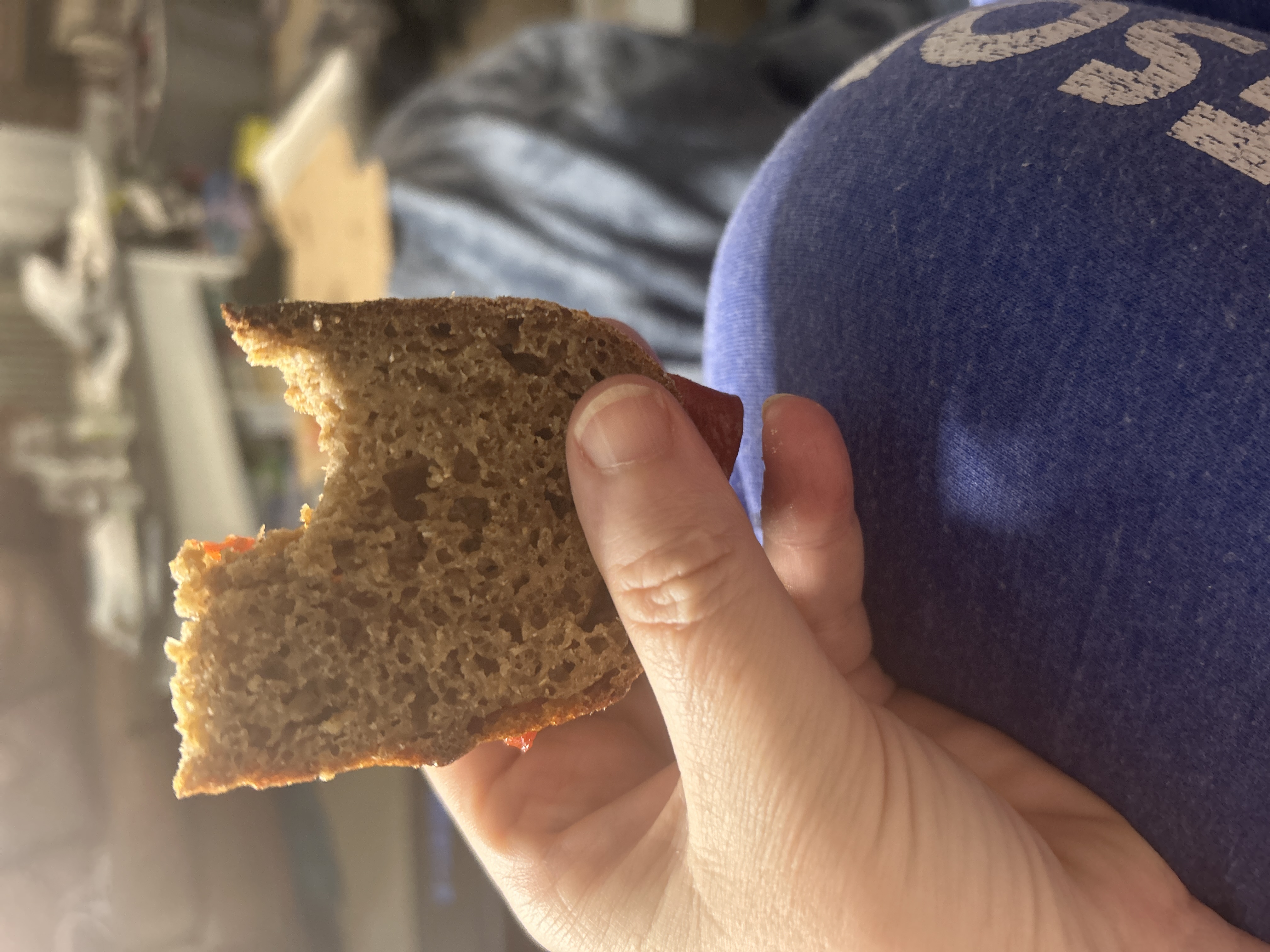
To my surprise, I was greeted by a golden crust. Not perfect. Not what I envisioned. But unmistakably bread.
Once cooled and sliced, the verdict was in:
A pleasant sour tang
A soft, pillowy crumb
Smaller air pockets, but still tender
A crust that wanted to be crunchier
It wasn’t my classic crusty Italian loaf—but it was absolutely edible, and honestly, pretty good.
The Silver Lining
Then came the sandwiches.
Ray kept it simple: uncured pepperoni and cheese. Somehow, those humble sandwiches turned this near-failure into a genuine win. The flavor carried the loaf, and suddenly the bake felt worth saving.
The takeaway? Even dough that seems completely lost can sometimes be rescued—with intention, restraint, and realistic expectations.
Embracing the Unexpected: Alternative Uses for Over-Proofed Dough
Now, let’s be real.
If you’re milling your own flour and maintaining sourdough, adding commercial yeast and vital wheat gluten probably isn’t your first choice. Ingredients matter, and I get that.
A fantastic alternative—especially when dough is this far gone—is to skip the oven entirely. Scoop the dough onto a hot skillet and turn it into flatbread. No added yeast. No gluten. Just pan-cooked, flavorful bread.
Some people suggest focaccia for over-proofed dough, but in this case, it was way past focaccia-friendly territory.
Final Thoughts
Sourdough baking is unpredictable. That’s part of the deal.
Some loaves teach patience. Others teach humility. And once in a while, a loaf that should fail surprises you.
So here’s to the messy bakes, the lessons learned, and the unexpected wins. Because in the end, it’s not just about perfect bread—it’s about the stories and resilience baked into every imperfect loaf.
Join our Online Community
Ready to ditch recipes and learn more about baking with fresh milled flour using methods and your imagination? Join my Fresh milled Flour Methods group. You can ask questions, share your wins, and more with an expectation of honesty and friendly interaction. I hear it’s the best place to be on Facebook.