
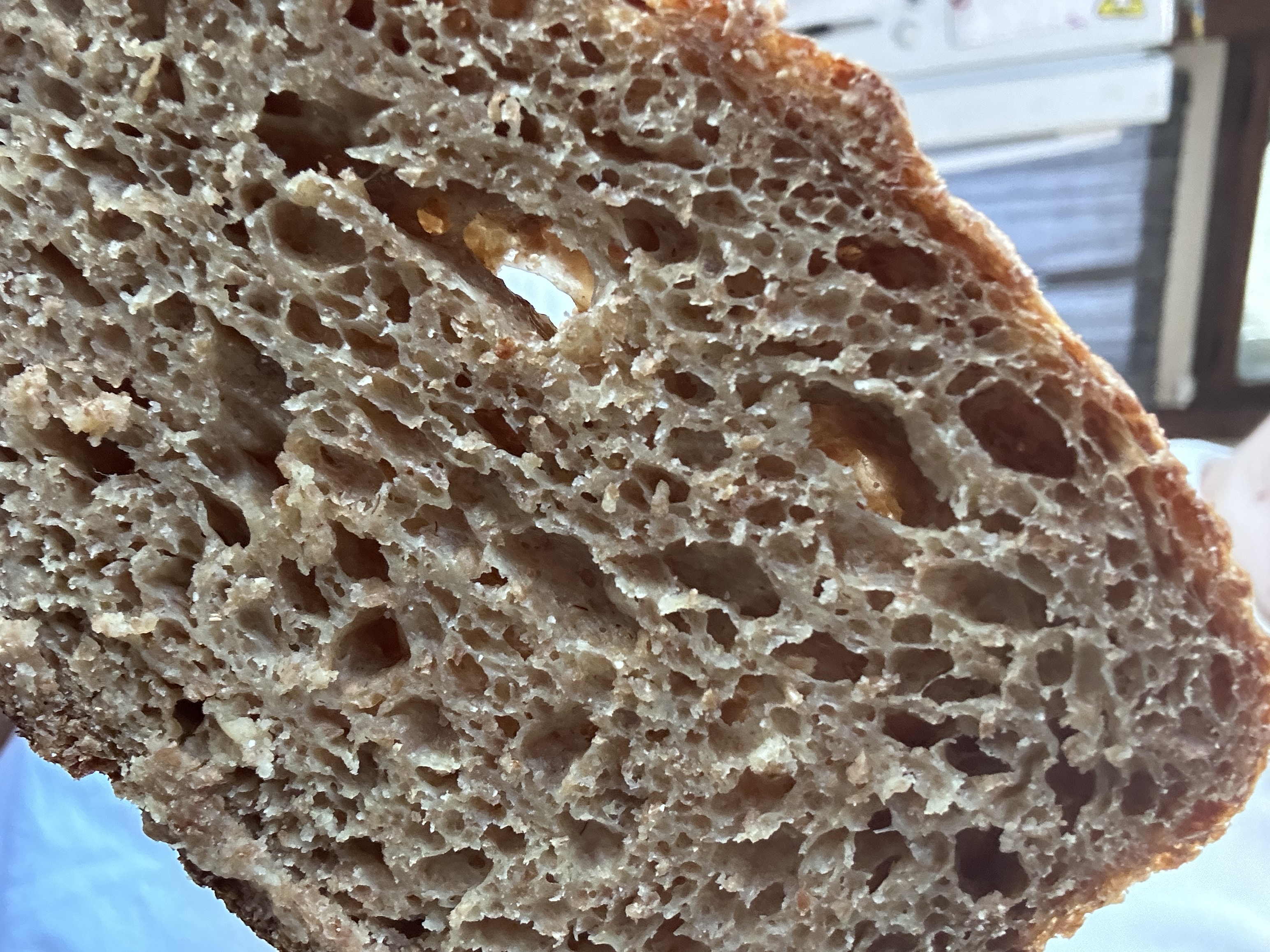
I’ve revamped this recipe after experimenting with different flour hydration levels, especially with freshly milled and refined flours. The changes resulted in a better texture and flavor, allowing me to eliminate the vital wheat gluten entirely. If you still prefer to use vital wheat gluten, feel free to add a tablespoon or two—the dough is wet enough to handle it without any other adjustments.
For the best results, handle your dough with care. The less you disturb it, the better the air bubbles will remain, especially when transferring it to the dutch oven.
Why I Love Freshly Milled Spelt for This Bread
We ran out of hard white wheat berries, so I decided to try 100% spelt Italian bread, and it turned out to be a game changer! Spelt is one of my favorite grains, and it works wonders, even though it’s classified as a soft grain. The fresh milled spelt gives the bread a distinct flavor that we couldn't stop eating—it was half gone before it even cooled!
Can You Make This Bread Without Vital Wheat Gluten?
Absolutely! When I first developed my rustic Italian bread using freshly milled flour, I thought vital wheat gluten was essential. Turns out, it's not! Here’s how to make the same recipe without it:
Make Yudane: Start by boiling some water. Add 25 grams of spelt flour into a container on your scale, then pour 50 grams of boiling water over it. Stir well to form your yudane.
Incorporate Yudane: Mix the yudane with the rest of the water in your recipe and continue as usual.
Can I add Vital Wheat Gluten for extra rise?
You bet! Because this dough is super high in hydration (the amount of water compared to flour), you can add a tablespoon or two of vital wheat gluten and it'll only improve the rise a bit — win win!
Can I Use a KitchenAid Mixer?
Yes! This recipe has a higher hydration level, so start by using the wire whisk attachments on the highest speed to mix the dough without the yeast. Once the dough climbs up the whisks, switch to the dough hook, add the yeast, and knead for just 2 minutes to incorporate everything.
Want Better Dough Structure?
After the first rise, perform your stretch and folds. Let the dough rise again in the fridge. This cold rise will help improve the structure. When you’re ready to bake, gently shape the dough before transferring it to the oven. I highly recommend using a silicone bread sling and parchment paper to handle the dough with care.
Enjoy the delicious results!
Join our Online Community
Ready to ditch recipes and learn more about baking with fresh milled flour using methods and your imagination? Join my Fresh milled Flour Methods group. You can ask questions, share your wins, and more with an expectation of honesty and friendly interaction. I hear it’s the best place to be on Facebook.