
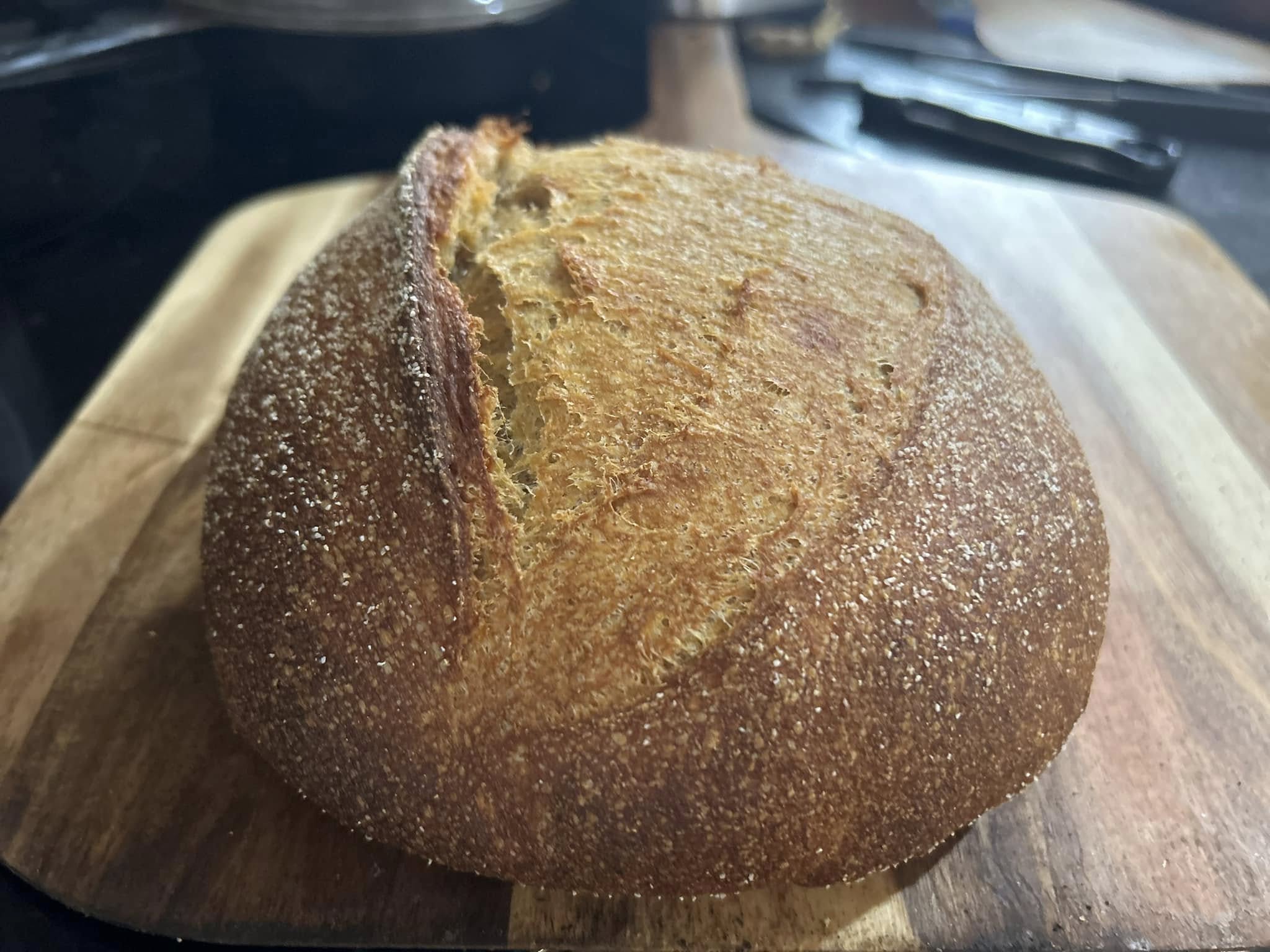
Mastering the Art of Baking Freshly Milled Bread
Baking bread isn’t just a science experiment — it’s the moment where everything you’ve done so far finally comes together. The mixing, fermenting, scaling, and shaping all lead to this step.
When you bake with freshly milled flour, understanding what’s happening in the oven helps you get consistent, reliable results instead of guessing and hoping for the best.
In our last segment of 📘The Fresh Milled Bread Method Series, we covered 💡 Shaping Bread Dough
🧠 Understanding What Happens During Baking
When bread goes into the oven, several important things happen in a specific order:
Yeast produces a final burst of gas, creating oven spring
Proteins set, giving the loaf structure
Starches gelatinize, forming the crumb
The crust forms and browns, locking everything in place
This is why proper proofing, shaping, and temperature matter — the oven doesn’t fix mistakes, it reveals them.
💡 Washing the Dough (Optional, but Powerful)
Before baking, you can apply a wash to the surface of your dough. This affects both appearance and crust behavior.
Washes can:
help toppings stick
delay crust formation slightly (allowing better oven spring)
change color, shine, and texture
Common Bread Washes
Egg wash – glossy, golden crust
Water wash – crisp crust, no added color
Milk wash – softer crust, gentle browning
Butter wash – rich flavor, soft shine
Use what fits the bread you’re making — not every loaf needs a wash.
👉 Silicone Pastry Brush
Toppings (If You Want Them)
After washing, sprinkle toppings onto the damp surface so they adhere well.
Some ideas:
Savory
Sesame seeds
Poppy seeds
Caraway
Garlic or onion (powder or bits)
Sunflower seeds (toasted or raw)
Chopped nuts
Sweet / Neutral
Rolled oats or barley
Flax seeds
Cinnamon
Shredded coconut
💡 If you sift bran (which I don’t recommend), at least use it as a topping or fold it back into the dough.
🧠 Scoring the Dough
Scoring gives bread a planned place to expand.
This is especially helpful for:
French loaves
Italian bread
Hearth-style loaves
Use a sharp knife or razor blade and score right before baking. Scoring can also help compensate slightly for under-proofed dough by directing oven spring where you want it instead of blowing out the side.
Baking the Bread
Once the dough goes into the oven, handle it gently. No dropping or slamming — that knocks out gas you worked hard to build.
Steam Matters
Steam early in the bake:
delays crust formation
improves oven spring
creates better color and crust texture
Baking by Bread Type
Hearth breads – baking stone or steel for strong bottom heat
Pan breads – middle to lower rack for even baking
Dutch oven breads – preheated pot traps steam naturally
🧠 When Is Bread Done?
Bread is done when the internal temperature reaches:
Lean dough: 190°F or higher
Enriched dough: up to 210°F
Other clues:
darker crust
hollow sound when tapped on the bottom
If it’s not there yet, put it back and check again in 5 minutes.
💡 Pullman pans and Dutch ovens tolerate longer bake times because they retain moisture.
💡 A Note on Oven Accuracy (This Matters)
If your bread:
sinks after baking
feels gummy inside
won’t bake through
There’s a good chance your oven isn’t actually at the temperature you think it is.
An inexpensive oven thermometer is a game changer.
🧠 I rely on temperature, not time. Once the bread hits temp in the center, it comes out — no matter what the clock says.
I use this
👉 Instant-read thermometer
Estimated Bake Times (Starting Points)
These are guidelines, not rules:
40–45 min – Standard 9×5 pan, Pullman 9×4×4
30–35 min – Pullman 8×4×4, 8.5×4.5 pan
25–30 min – Small loaf pans (¾ lb)
15–20 min – Mini loaves, rolls, bagels, pretzels
🧠 Always check temperature earlier when baking hotter.
Baking Temperature Guide
Lean Dough
400–425°F
Strong rise, active yeast
Enriched Dough
350–400°F
Prevents over-browning
Sourdough
425–475°F
Steam encouraged for crust
💡 I often preheat hot, then lower the temp once the bread goes in — oven spring first, color control second.
Final Thoughts
Baking with freshly milled flour isn’t about memorizing times and temperatures — it’s about understanding dough, heat, and cause-and-effect.
Once you bake by feel and temperature, you’re no longer stuck following recipes. You’re baking with intention.
Next up:
💡 Cooling & Storing Freshly Milled Bread
Join our Online Community
Ready to ditch recipes and learn more about baking with fresh milled flour using methods and your imagination? Join my Fresh milled Flour Methods group. You can ask questions, share your wins, and more with an expectation of honesty and friendly interaction. I hear it’s the best place to be on Facebook.