
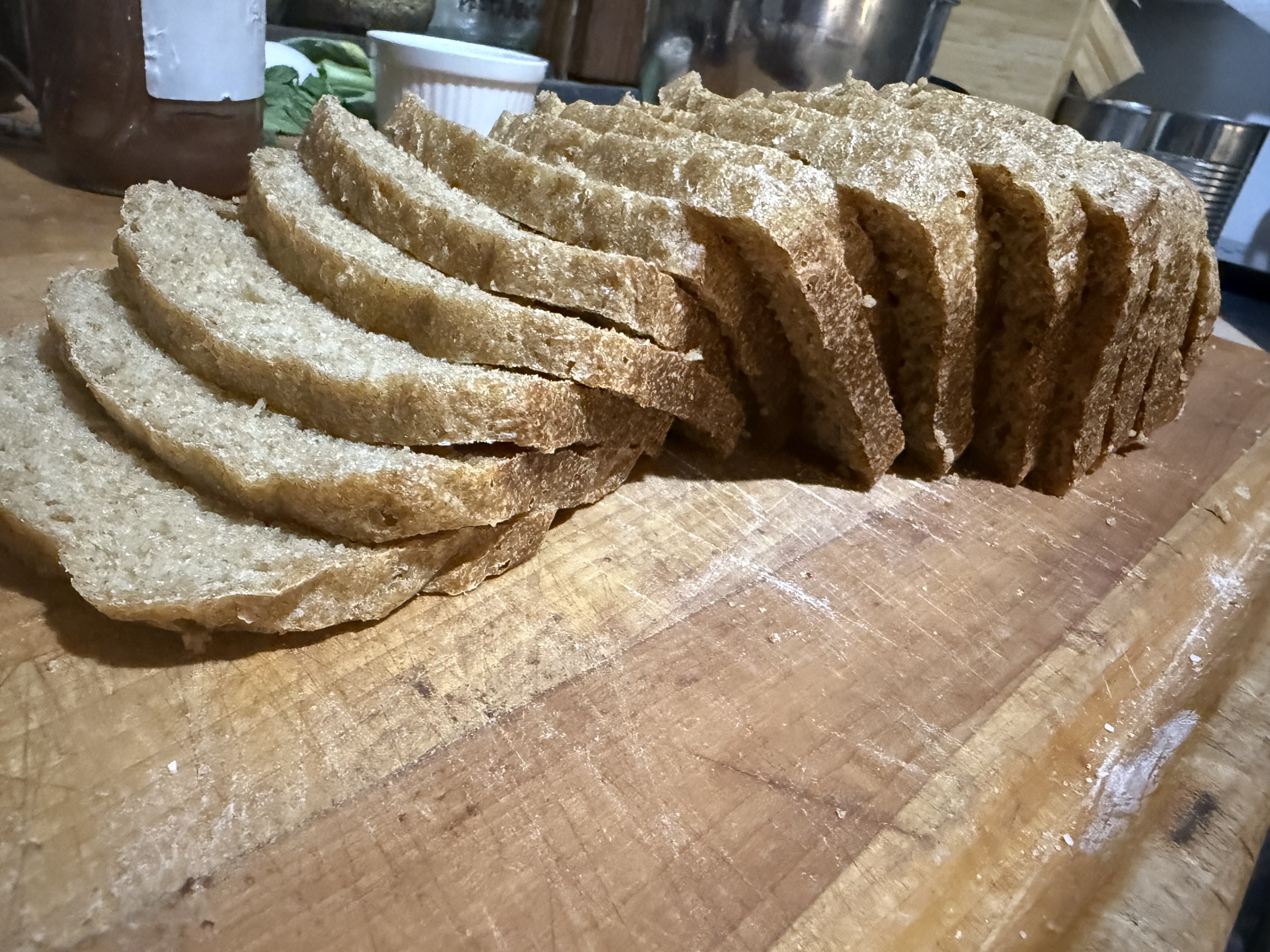

When I fell into this fresh milled journey, we were eating limited quantities of Einkhorn bread. I’d read Carla Bartolucci’s book Einkhorn, and was buying the flour from Jovial.
One day I couldn’t find the flour in my store locally OR on their web site, but the Einkhorn wheat berries were in stock. I was brought back to 15 years ago: our gluten free days. In an instant I remembered grinding gluten free grains into flour in my Vitamix blender. Why couldn’t I do the same with these? I pressed buy, and had 30 lbs. of Einkhorn wheat berries delivered a few days later.
What’s the Difference?
A funny thing happened. After I started making the bread with the fresh flour from my Pampered Chef Blender, my son’s skin started healing. That’s why we were eating Einkhorn in the first place. He had eczema so bad he would scratch his skin bloody. I’ll spare you the nasty pics from back then. He handled the Einkhorn without flare ups, but when I ground it into flour at home his skin started to heal and I needed to know what the difference was. So I started researching and at the same time looking for a way to grind the flour that was more convenient.
Fast Forward
It’s been almost 5 years we’ve been milling, and we no longer mill with only Einkhorn. Why?
- Price: Einkhorn is expensive! A LOT more expensive than other grains
- It wasn’t the Einkhorn that healed him, it was the benefits of whole grains milled fresh that gave his body the nutrients needed to heal his skin.
The Base
The Changes
- Grains: used all Einkhorn
- Water: Drop the COLD water by the amount of the boiling water.
- Example: 280 g of cold water should be dropped to 240 g ( 280 - 40 = 240)
Things to Remember
- Einkhorn is ALWAYS sticky! Don’t fall into the trap of adding more flour hoping it’ll be less sticky. It won’t!
- Use wet, or better yet, OILED hands when doing stretch and folds.
- The dough won’t hold its shape like wheat dough. Don’t get discouraged. Work quickly and plop or even pour your dough into a prepared bread pan. Prepared means well-greased or parchment lined.
Bulk Fermentation (the first rise)
I let mine rise for somewhere around 6 hours, slightly less in the summer if on the counter. It should have risen some, but NOT doubled. This dough isn’t strong enough for a dough doubling.
Shape the dough the best you can, and if needed, coil fold and plop it into a bread pan.
I let the dough finish rising on the counter while my oven preheats to 450 F.
Baking
Bake the loaf in a bread pan with a second bread pan over top and upside down. This creates a Dutch oven so the steam stays inside and the bread can rise nicely and thoroughly.
I bake covered for 30 minutes, and then temp my bread. If the internal temp is 197 F or higher, it’s done! Take it out to cool thoroughly before slicing.
If your bread isn’t up to temperature yet, let it bake uncovered for another few minutes. I estimate 2 degrees per minute in my oven, and that’s how I determine how long to bake. If I’ve got 10 degrees to go in the bread, I’ll add another 5 minutes of baking and re-check.
Cooling
Definitely DO let the bread cool for a while before slicing it. Why? Because it isn’t done solidifying when it’s still hot from the oven. If you cut your bread before it’s fully cool, expect it to be gummy and look undone.
If you already sliced it, don’t worry, just set it cut side down to cool the rest of the way on the counter.
How I Use Einkhorn Now
I don’t prefer to use the Einkhorn in all my bread because it’s expensive and really sticky. The ways I use my Einkhorn:
- feeding my sourdough starter - it LOVES Einkhorn
- anything calling for all purpose flour is a win with Einkhorn
- in bread at 25% of the flour or less.
Join our Online Community
Ready to ditch recipes and learn more about baking with fresh milled flour using methods and your imagination? Join my Fresh milled Flour Methods group. You can ask questions, share your wins, and more with an expectation of honesty and friendly interaction. I hear it’s the best place to be on Facebook.