
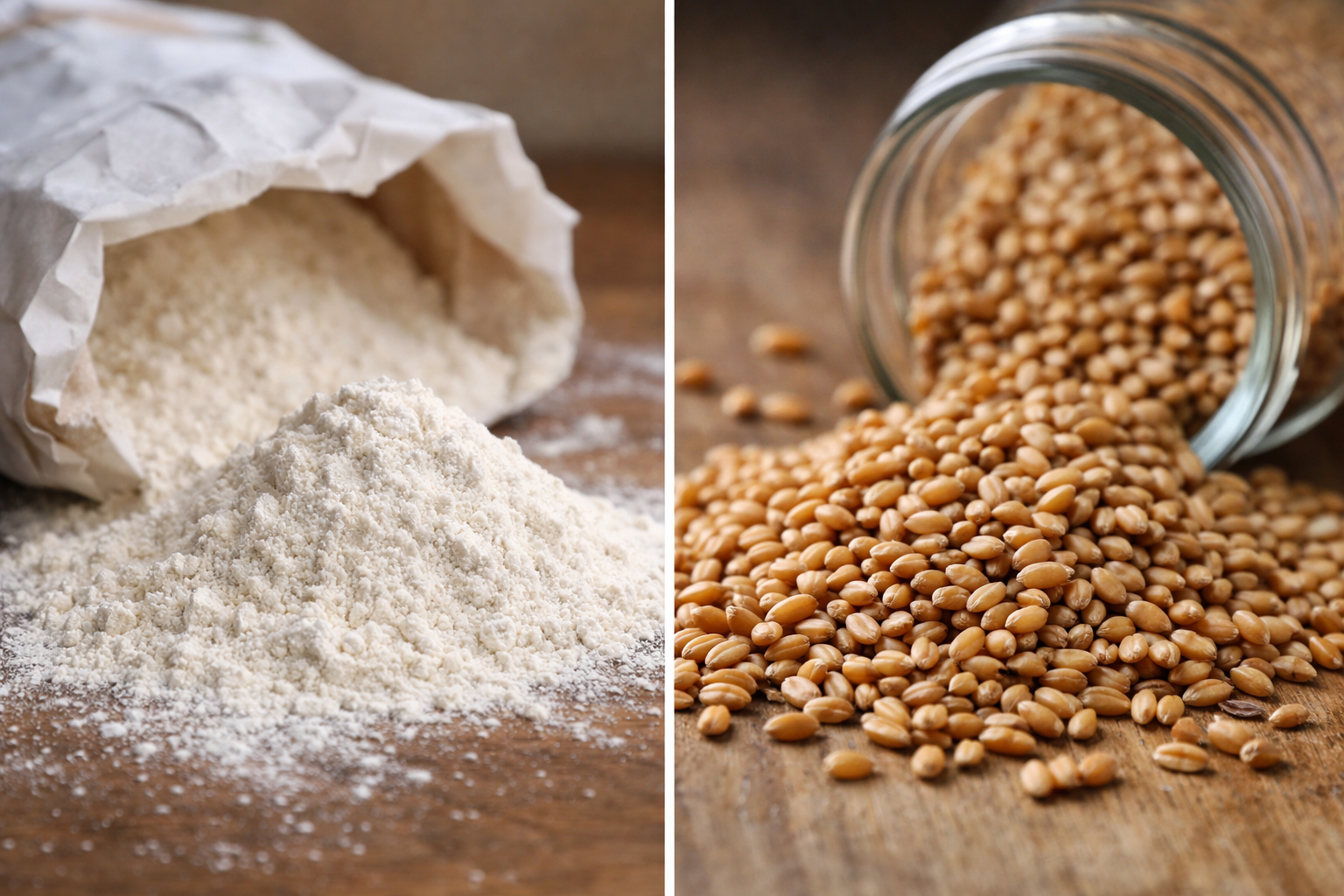
Fresh Milled Flour vs Store-Bought Flour
This is the question I hear most often from people who aren’t milling yet:
“Can’t I just buy organic, unbleached flour from the store?”
The short answer is: you can — but it’s not the same thing.
The difference isn’t about being “more natural” or chasing trends. It comes down to what happens to grain between harvest, milling, storage, and baking.
What Changes When Flour Sits on a Shelf
Grains are living seeds. Once they’re ground into flour, they immediately begin to change.
To make flour shelf-stable, commercial milling removes the bran and germ — the parts of the grain that contain:
healthy fats
fiber
vitamins
minerals
phytochemicals
What’s left is mostly starch. This keeps flour stable for months or years, but it also strips away much of what made the grain nourishing in the first place.
Fresh milling keeps the entire grain intact until the moment you use it.
Whole Grain Isn’t Just “More Fiber”
Freshly milled flour includes:
the endosperm (energy)
the bran (fiber and minerals)
the germ (fats, vitamins, antioxidants)
Store-bought white flour contains almost exclusively the endosperm.
That difference affects:
digestion
blood sugar response
satiety
flavor
how dough behaves
It’s not subtle once you experience it.
Why Enriched Flour Isn’t the Same Thing
To compensate for what’s removed, commercial flour is often enriched with synthetic vitamins like:
folic acid
niacin
thiamine
riboflavin
iron
These additions help prevent deficiency at a population level, but they’re not identical to the naturally occurring forms found in whole grain.
Some people — especially those with genetic variations affecting methylation — don’t process synthetic forms as efficiently.
Fresh milled flour already contains these nutrients in forms your body recognizes.
Additives You Don’t Have to Think About When You Mill Fresh
Depending on how it’s processed, store-bought flour may involve:
bleaching agents
dough conditioners
preservatives
enzymes added for consistency
chemical desiccants used before harvest
pesticides used after harvest and before packaging
Fresh milling skips all of this.
You start with grain.
You end with flour.
This Isn’t About Fear — It’s About Choice
Many people already spend money on:
supplements
“clean” foods
specialty products
Fresh milling shifts that investment upstream — into the food itself.
Instead of replacing nutrients later, you keep them where they started.
And as a bonus: the flavor of fresh flour is on an entirely different level.
So… Which Would You Prefer?
Flour designed to last years on a shelf
—or—
flour designed to nourish and be used right away?
For me, milling fresh meant fewer supplements, better food, and a deeper understanding of how grains actually work, and a lower grocery bill.
Once you experience it, it’s hard to un-know.
Join our Online Community
Ready to ditch recipes and learn more about baking with fresh milled flour using methods and your imagination? Join my Fresh milled Flour Methods group. You can ask questions, share your wins, and more with an expectation of honesty and friendly interaction. I hear it’s the best place to be on Facebook.