
Choosing the Right Grain
A Simple Framework for Fresh Milled Baking
When you mill your own flour, the goal isn’t to memorize recipes — it’s to understand how ingredients behave so you can make what you want, when you want.
Everything on this site is organized around three layers:
Method – how the dough is made
Base Recipe – a reliable starting point
Variations – grain choice, hydration, shaping, and flavor
Grain selection lives in the variation layer.
Instead of asking “What recipe do I need?”
Ask “What am I making, and what does it need to do?”
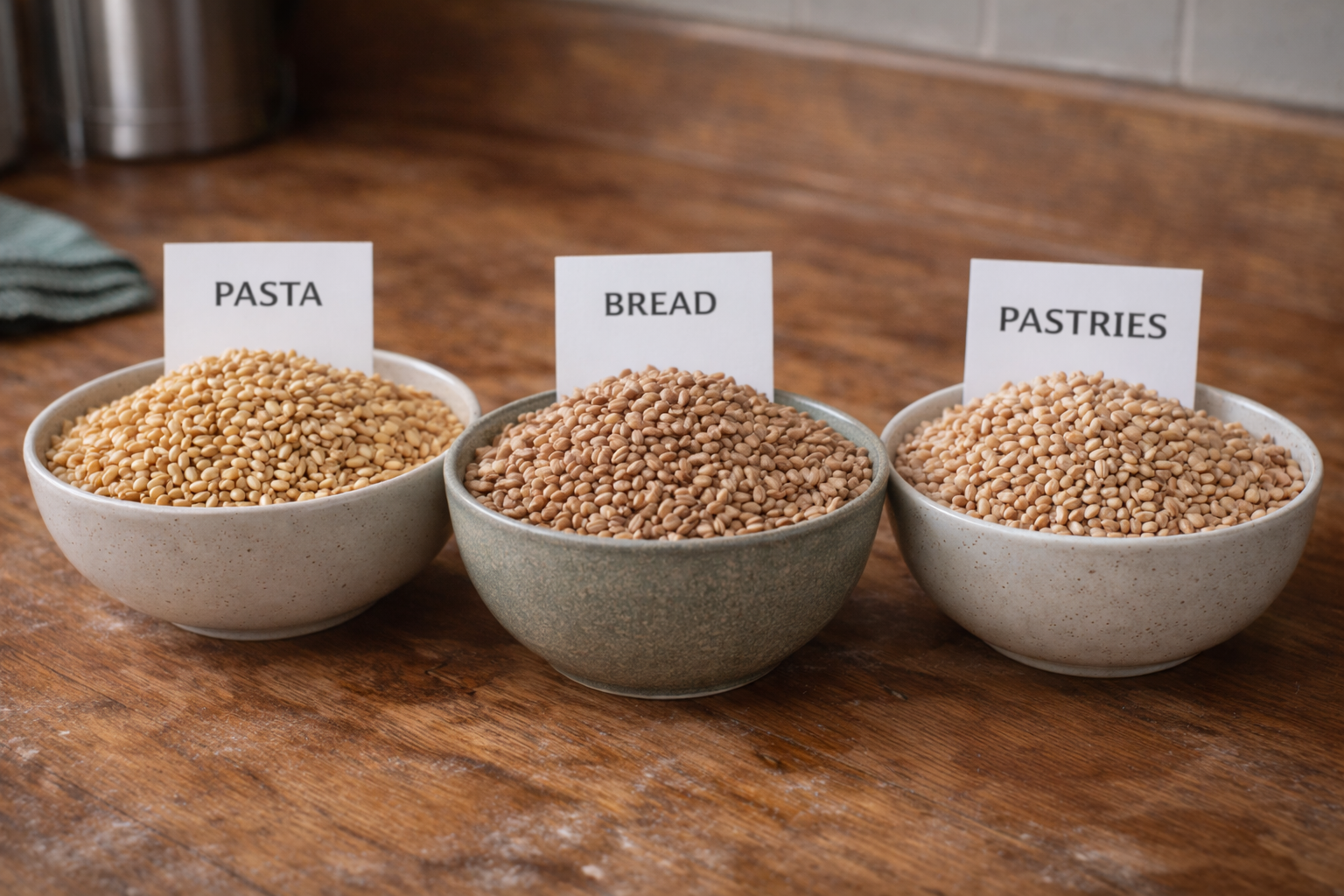
Almost all baked goods fall into three categories.
1. Pasta (No Rise, Firm Structure)
Pasta is unleavened. There’s no fermentation and no oven spring.
What matters here is firmness and durability.
Best grain choices:
Durum wheat
Khorasan (Kamut)
Emmer
These grains produce dough that holds together, extrudes cleanly, and maintains shape during cooking.
Use your pasta method, then adjust hydration and shape as needed.
2. Bread (Fermented, Structured Rise)
Bread relies on yeast or sourdough to trap gas and rise.
That means the grain must provide structure and elasticity.
Best base grains:
Hard white wheat (spring or winter)
Hard red wheat (spring or winter)
Ancient grains like spelt, einkorn, and rye fit here as variations, not replacements. They change flavor, softness, and handling — not the method itself.
Start with a bread base recipe, then blend or swap grains intentionally.
3. Pastries (Tender, Minimal Structure)
Pastries don’t need strength — they need softness.
These include muffins, biscuits, quick breads, cakes, cookies, and similar bakes.
Best grain choices:
Soft white wheat
Soft red wheat
Gluten-free grains like sorghum or millet
Use your pastry base, then choose grains that stay tender instead of fighting gluten.
Can You Use Any Grain for Anything?
Yes — and sometimes you should.
But once you understand the framework, you’ll know what you’re trading off.
Hard grains = more structure, more chew
Soft grains = tenderness, easier handling
Ancient grains = flavor and softness, less strength
Nothing is “wrong” — it’s just a different result.
How This Fits the Site (Start Here)
Here’s how to use this information without getting stuck searching recipes:
Pick your method (bread, pasta, pastry)
Start with a base recipe
Adjust grains as a variation, not a reinvention
Helpful next steps:
Once you understand this framework, you don’t need endless recipes —
you need confidence, and a place to start.
If this helped things click, you’re already doing it right.
I’m Dr. Mel — here to remind you that everything is better when you Just Mill It.
Join our Online Community
Ready to ditch recipes and learn more about baking with fresh milled flour using methods and your imagination? Join my Fresh milled Flour Methods group. You can ask questions, share your wins, and more with an expectation of honesty and friendly interaction. I hear it’s the best place to be on Facebook.