
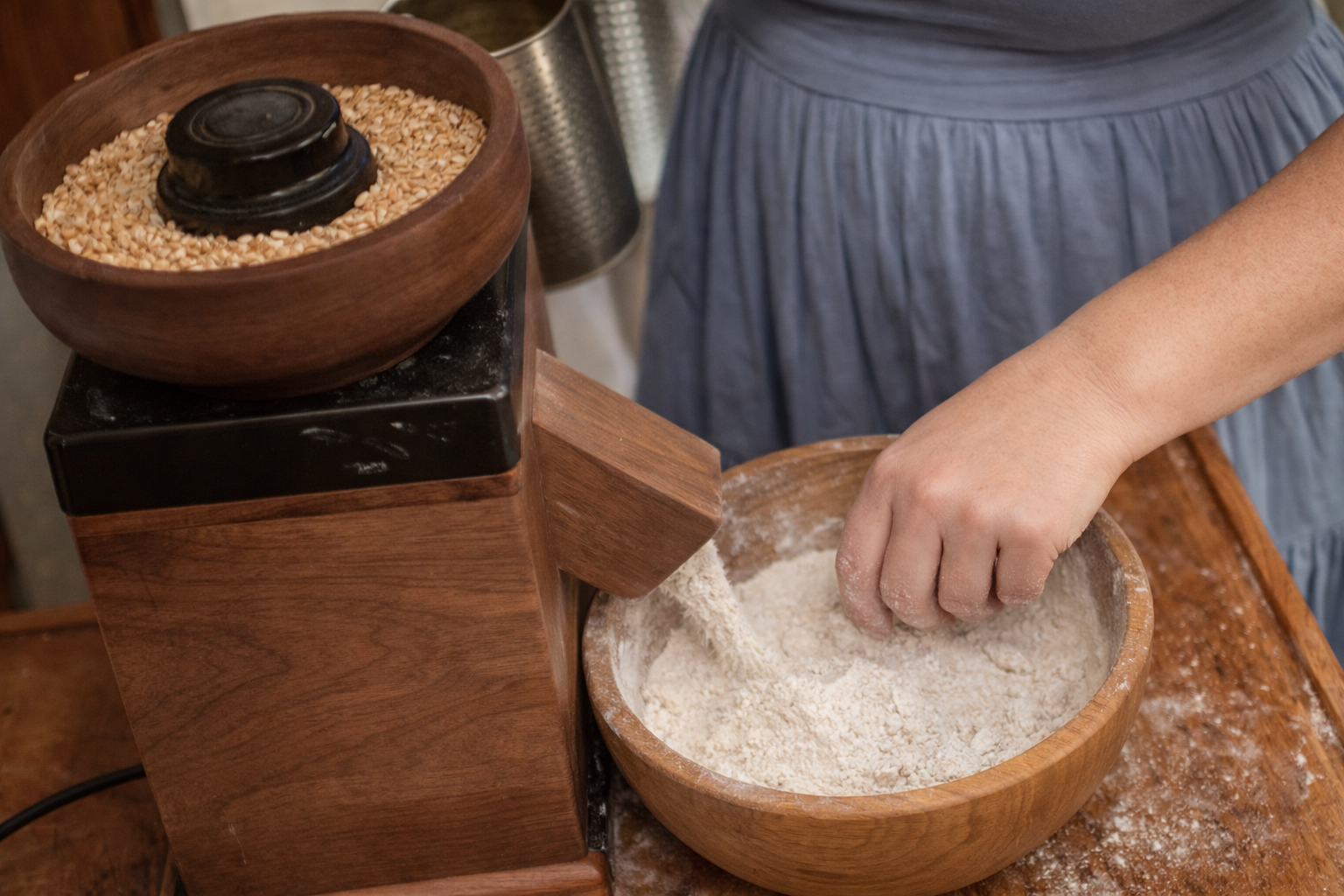
How to Make Wheat Flour at Home (Step-by-Step)
Making bread starts long before the dough is mixed. The very first step of the fresh-milled bread method is turning whole grains into flour—and how you do that depends on the grain mill you use.
Whether you’re using an impact mill, a stone mill, or a manual mill, the goal is the same: fresh flour, milled correctly, without additives or guesswork. Once you understand your mill, making wheat flour at home becomes one of the simplest—and most empowering—steps in baking.
This guide walks you through exactly how to mill wheat into flour, with clear instructions for the most common grain mills, plus videos so you can see it done in real time.
🎥 Video: How to Use a Stone Grain Mill (Step-by-Step)
This video shows exactly how I mill wheat berries into fine flour using a stone mill, including how to set fineness, what to listen for, and when to stop.
Stone mills are often the most intimidating for beginners, but once you see and hear the process, everything clicks.
Common Grain Mills Used at Home
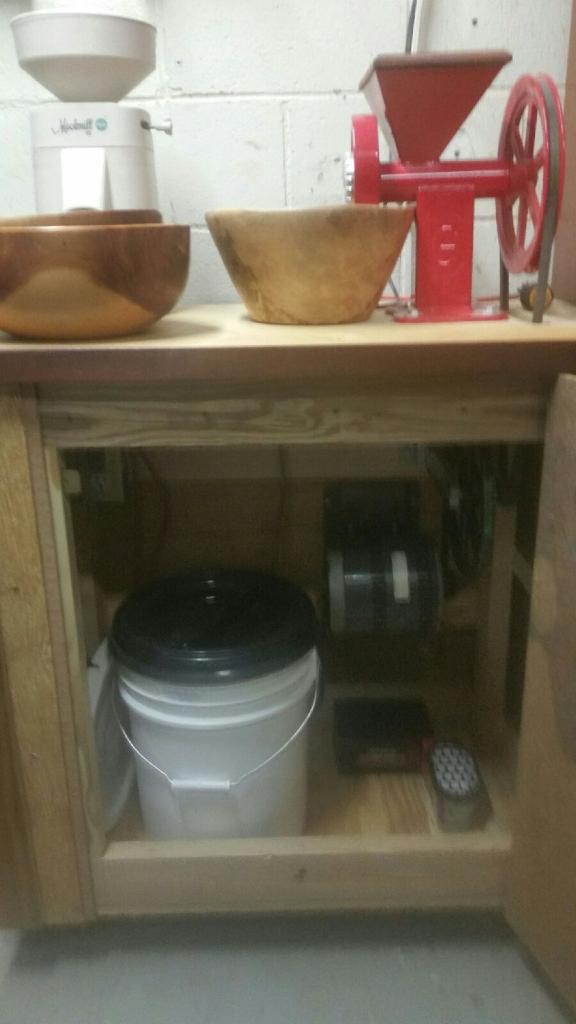
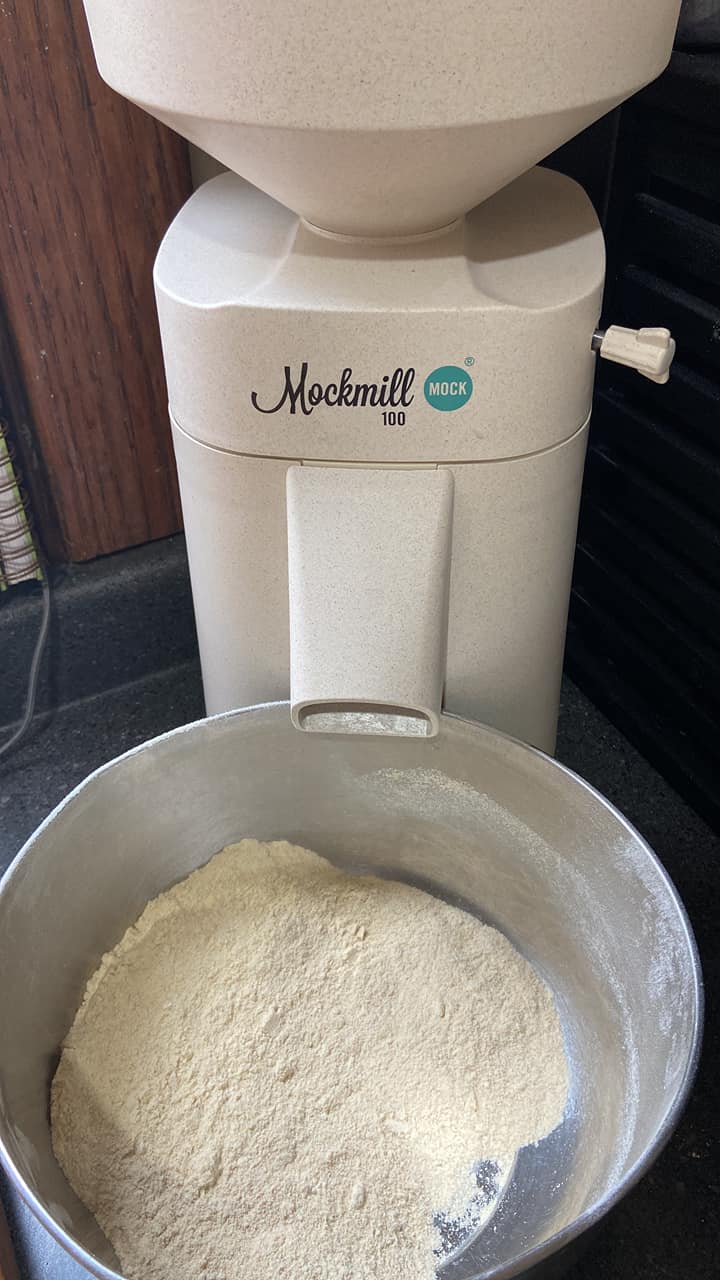
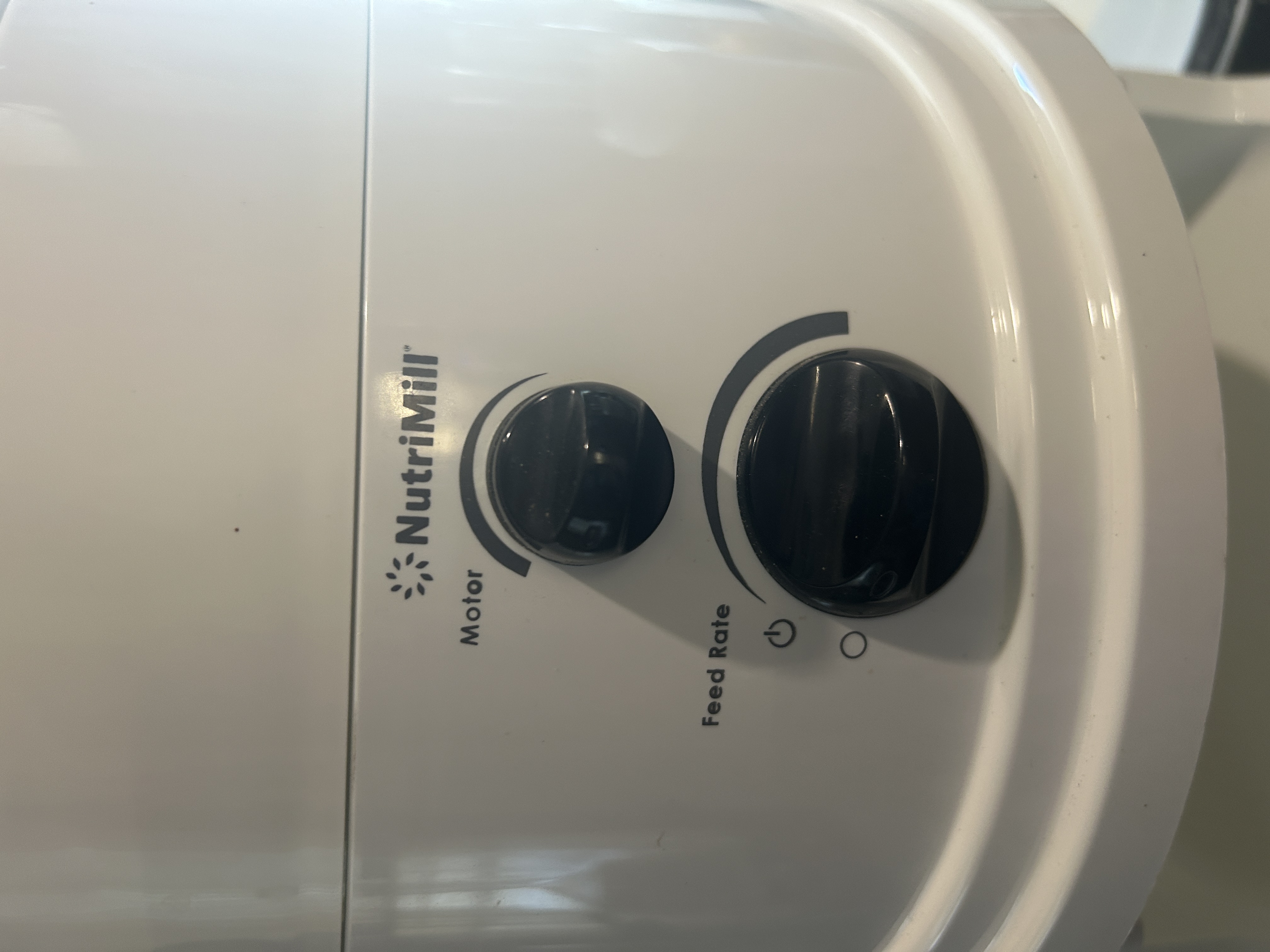
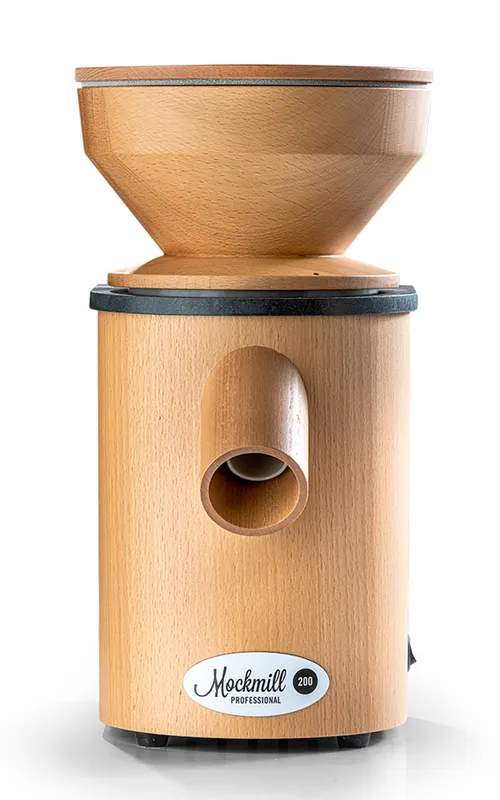
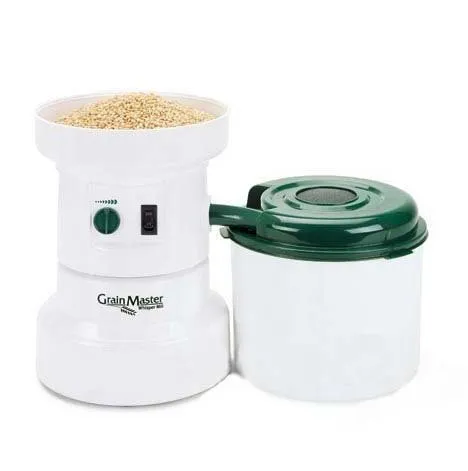
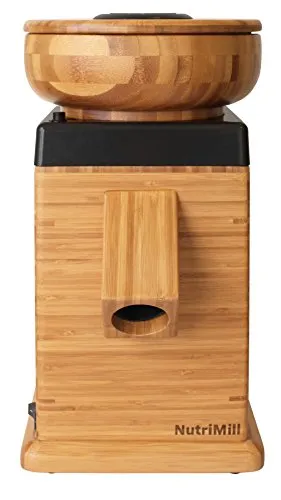
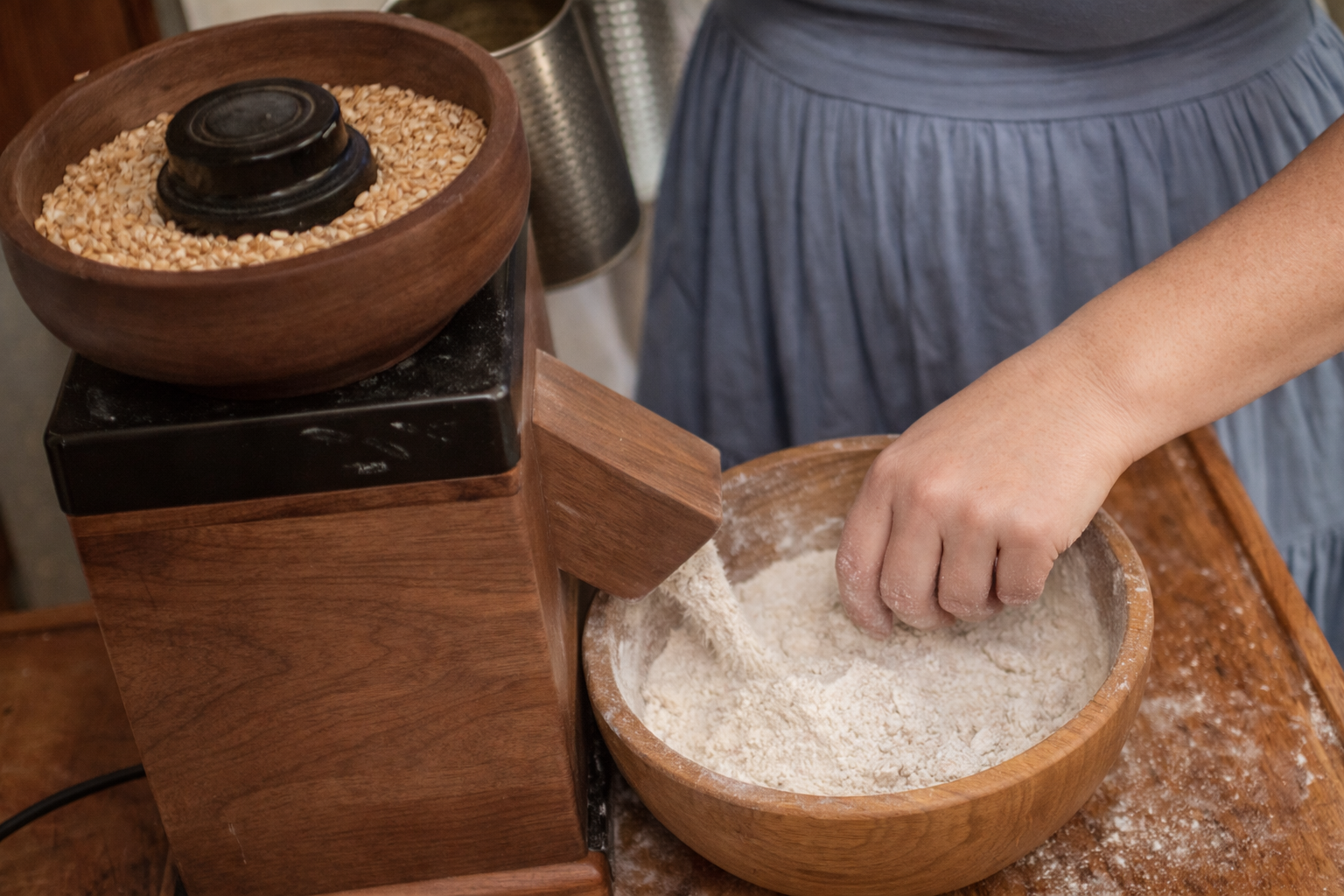
Below are examples of popular grain mills used for milling wheat flour at home. The steps are similar, but each mill has its own rhythm.
Impact Grain Mills
Impact mills grind grain by pulverizing it at very high speed. They’re fast, powerful, and efficient—though they are loud. If you love speed and simplicity, these mills get the job done quickly.
How to mill wheat with an impact mill:
Fully assemble your mill according to the manufacturer’s instructions
Turn the mill on
Pour the grains into the hopper
When the pitch changes from low to high, the grain is finished
Turn off the mill and remove the flour from the container
Video guides:
Electric Stone Flour Mills
Electric stone mills are modern counter-top versions of traditional grist mills. They grind grain between two stones, which can be adjusted for fine or coarse flour. Once you learn the sound and feel of your mill, they are incredibly consistent and gentle on flour.
How to mill wheat with a stone mill:
Plug in the mill and turn it on
Adjust the stones until you hear a light tapping (for fine flour)
Place a bowl under the flour spout
Pour grains into the hopper and place the lid on top
Adjust the fineness of the grind by tightening down the stones yet still maintaining a steady flow of flour. Tip: you should never hear the stones tapping while there are grains running through the mill. If so, back those stones apart until the tapping stops and the flour flows steadily.
When the stones begin tapping again, turn off the mill
Stone Mill Video Guides
Getting your mill unstuck (for when grain is added before turning it on)
NutriMill Harvest
KoMo Mills
Manual Grain Mills
Manual mills trade speed for control and durability. They’re excellent for off-grid baking, small batches, and anyone who enjoys being part of the process.
Manual mill video guides:
WonderMill Jr. (steel & stone burrs for oily seeds)
Making Bread Flour Without Vital Wheat Gluten
If you’re wondering how to make bread flour at home—without adding vital wheat gluten—the answer is simple:
All you need is hard wheat berries and a properly adjusted mill.
Fresh-milled flour already contains the bran, germ, and endosperm in their natural proportions. No chemical conditioners, no bleaching, no stabilizers—just real flour.
If you’re unsure which grains to start with, this Grains by Category guide will help you choose the right grain for bread, pasta, or pastries.
Method Over Recipes
On this site, we don’t rely on endless recipe searches. We focus on methods, base doughs, and intentional variations.
Milling your own flour is Step #1. Once you understand it, everything else—hydration, kneading, shaping, baking—becomes easier to adjust with confidence.
Ready to Bake?
If you want to jump straight into bread-making, Beginner's Bread Dough is the perfect place to start. It’s designed to work with freshly milled flour and stay soft for days.
Now that your flour is milled, you’re ready for Step #2: Mixing & Kneading, where hydration, timing, and structure start to matter.
Join our Online Community
Ready to ditch recipes and learn more about baking with fresh milled flour using methods and your imagination? Join my Fresh milled Flour Methods group. You can ask questions, share your wins, and more with an expectation of honesty and friendly interaction. I hear it’s the best place to be on Facebook.