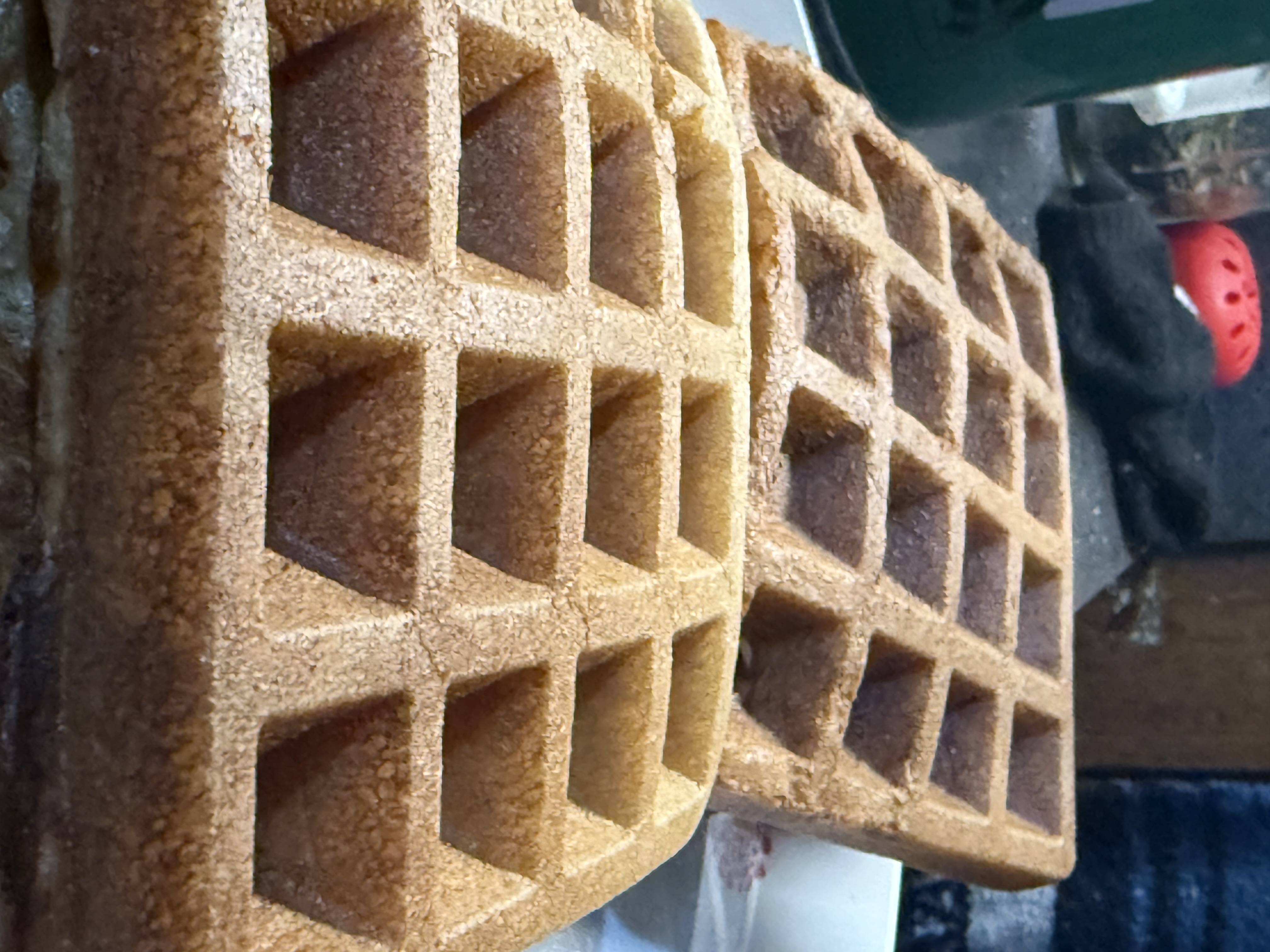
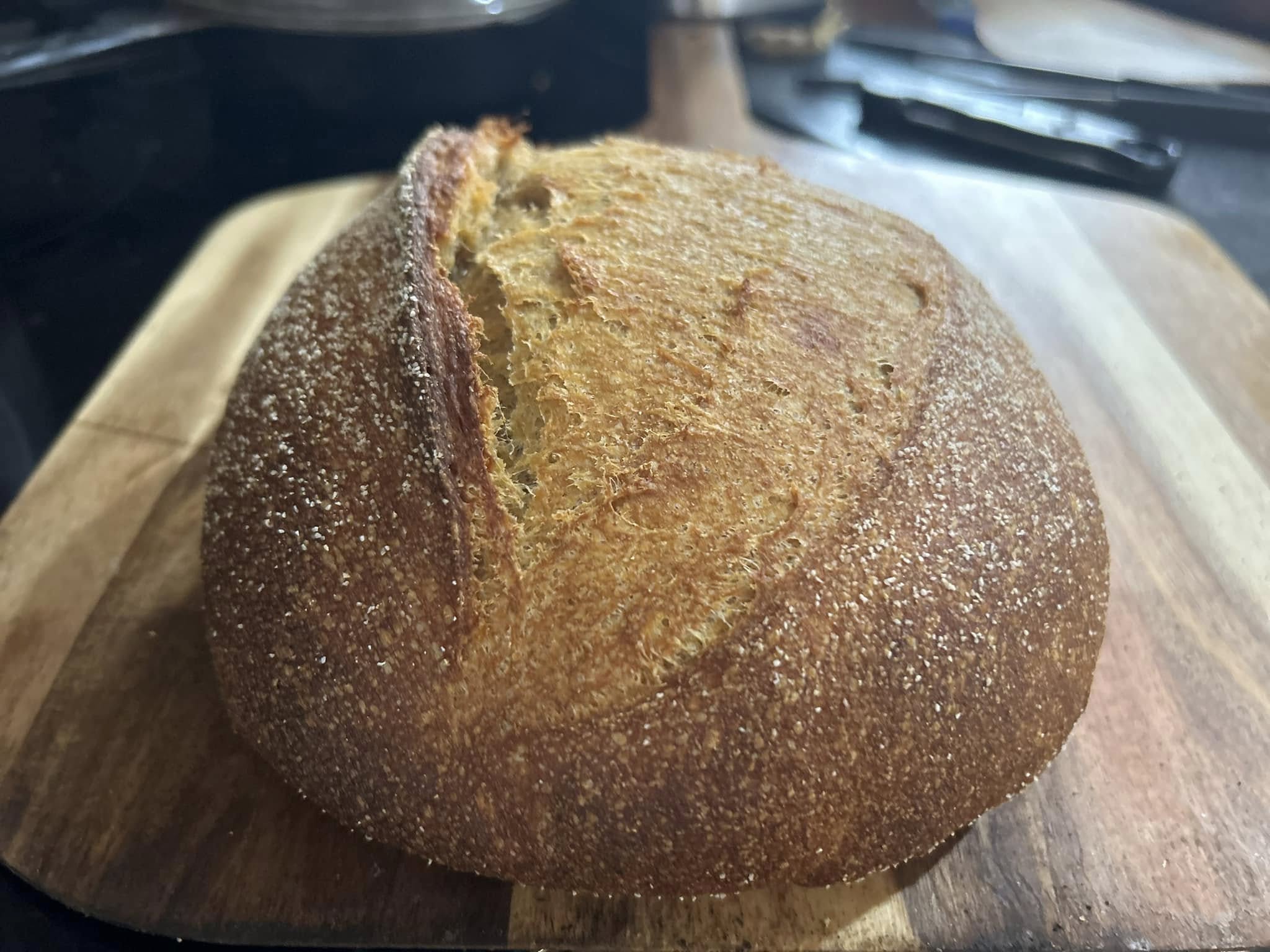
Sourdough Italian Bread
This is my italian bread base converted for sourdough. I've made it with both liquid starter and stiff starter and they both turned out wonderful.
Recommended Pan
Batch Details
Hydration: 83.8%
Total dough weight: 866 g
Portions
Scale by
Ingredients
- 400 g wheat berries, hard (if using liquid starter, use 360 grams)
- Yudane Ingredients:
- 20 g flour, any (set aside from milled flour)
- 40 g water, boiling
- Remaining Ingredients:
- 310 g water, cold (if using liquid starter, use 270 grams)
- 8 g sea salt
- 80 g sourdough starter, stiff (or liquid starter. )
- 8 g lemon, juice (or other citrus juice)
Directions
-
Put your kettle on, or boil some water however you do it.
-
Mill the grain into fine flour.
Prepare Dr. Mel's Quick No-Wait Yudane:
-
Place the yudane flour at the bottom of your mixing bowl, and pour the boiling water over it.
-
Quickly mix the flour and boiling water together into a paste.
-
Mixing the Bread:
-
Add the cold water to the mixing bowl, followed by the remaining ingredients. This allows the water to cool the yudane so it doesn't kill your sourdough starter.
-
Knead with your dough hook until the dough looks smooth and shiny and fully cleans the bowl. This will vary greatly depending on the mixer you have. Mixers with bottom motors will need a rest between mixing so dough is not overheated OR the flour and the water must be very cold.
Lamination
-
Optional: Lightly oil your counter, and dump the dough onto it. Gently, with wet hands and a bench scraper, stretch the dough into a large rectangle. Fold one side over to cover 1/3 of the regtangle, and then fold the other side over onto the last fold. Now do the same thing from the other direction. You just created layers with a technique called lamination. You can skip this if baking bread in a loaf pan, but don't skip for an open bake.
Form a taut skin on dough ball:
-
Whether you did lamination or not, gently shape your dough into a ball with a nice taut skin. This will help maintain structure through the bulk fermentation.
Bulk Fermentation (The First Rise)
-
Transfer the dough into a glass bowl with a lid and plenty of room to rise.
-
Check your dough in 30 minutes to an hour. Did the dough spread out from that nice taut ball shape, and now the dough is flatter, sides of the dough touching the sides of the bowl? If so, we are going to do our first set of coil folds.
-
For coil folds, with wet hands, we gently slide our hands underneath the dough a little closer to us than the center of the dough. Gently lift the dough up until the back part of the dough releases from the bowl and flops down. Gently place the dough back down with the back of the dough on the bottom of the bowl. Turn the bowl all the way around (180 degrees), and repeat that.
-
Now turn the bowl 90 degrees (1/4 turn) and do it again. Lift the dough a little closer to you than the center of the bowl, let the dough behind your hands release and flop down. Set the back of the dough on the bottom of the bowl. Turn the bowl all the way around (180 degrees) and repeat. You've just finished your first set of coil folds!
-
Repeat these last two steps (the coil folds) when you notice the dough has lost its structure and flattened out against the sides of the bowl. Eventually, you'll be able to feel the air filling up the dough, making it light and puffy. Pay attention.
When is the bulk fermentation done?
-
When your dough has risen approximately 50%, and it's fully of bubbles, you may notice it is also less sticky and it pulls away from the bowl nicely. These are all signs that you can shape your bread dough, and prepare for the second rise.
Shaping the dough
-
If you are concerned about dough sticking to your board, you can lightly oil it or lightly flour it. Your choice. Gently turn the dough out onto the counter. Gently shape it into a loaf shape, with a taut skin but be careful not to remove all the beautiful bubbles from your dough. This dough isn't as forgiving as yeast.
-
Place your dough into a greased or parchment/silicone sling lined bread pan, and pre-heat your oven to 450 F.
-
Once the oven has heated fully, and the dough has crested the top of the bread pan, place another bread pan over it, upside down. This creates a dutch oven, capturing the steam as the bread bakes. This will allow it to rise higher before the crust forms.
-
Place the loaf pan dutch oven into the center of the oven, close the door, and set a timer for 30 minutes.
-
Check the internal temp of the bread dough. If it's reached 190 F in the absolute middle of the loaf, it's done! If it didn't, remove the lid, and bake for another 10-15 minutes, or until it reaches 190 F or above.
-
Remove the pan from the oven, and the bread from the pan. Let cool for 3 hours on a baking rack before slicing open.
I Made This!
Share your bake and be the first to show it off.
Recipes From This Base
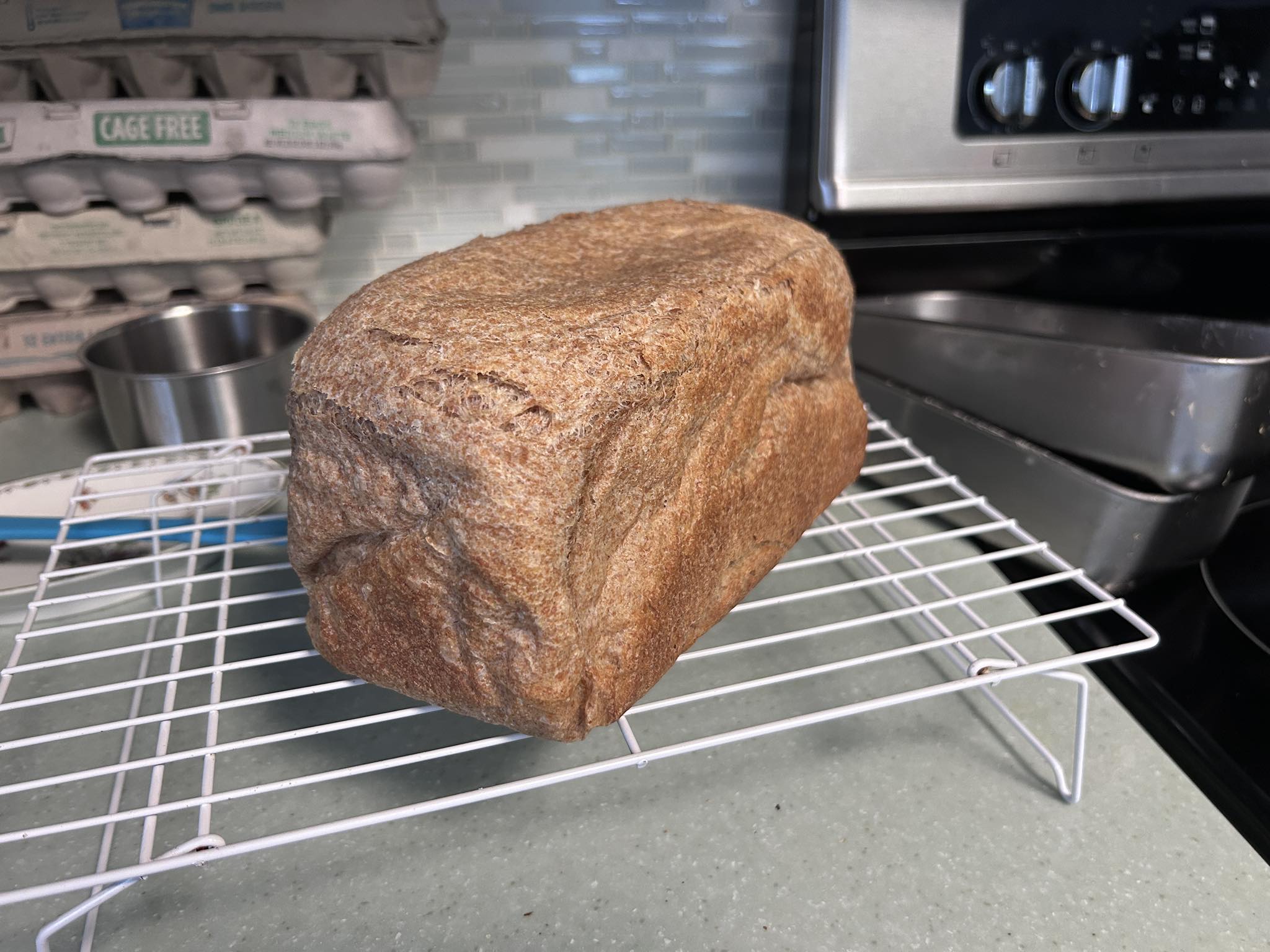
Jewish Rye Sourdough
Jewish rye bread is made with wheat and a little rye, with caraway seeds for that rye flavor we love. Download PDF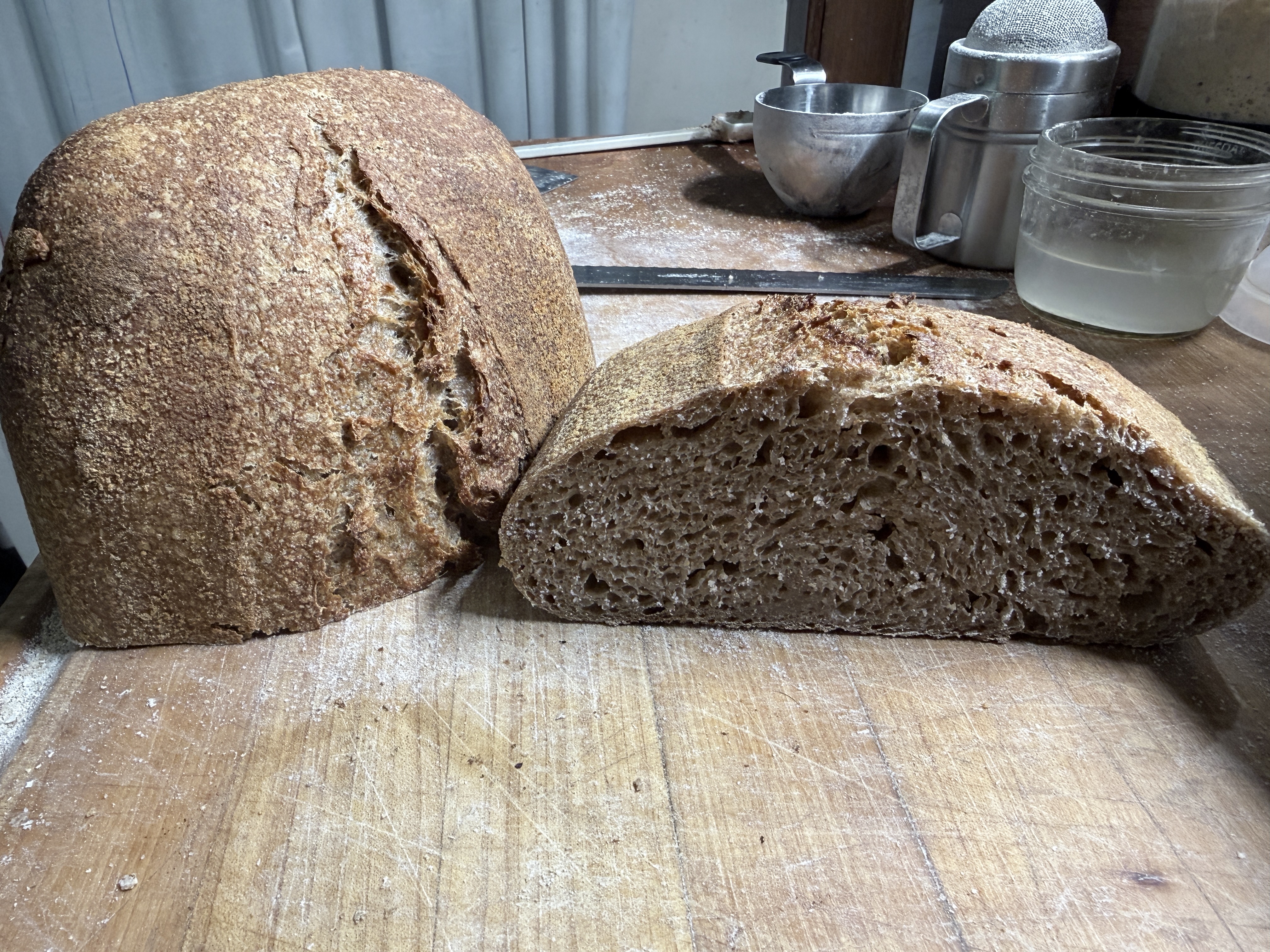
Multi-Grain Italian Bread
We change things up using my favorite blend of grains: red fife, kamut, spelt, barley and rye. Bonus points if you also used Einkhorn flour to feed your starter. You just made this a 6 grain bread that's to die for. Download PDF