
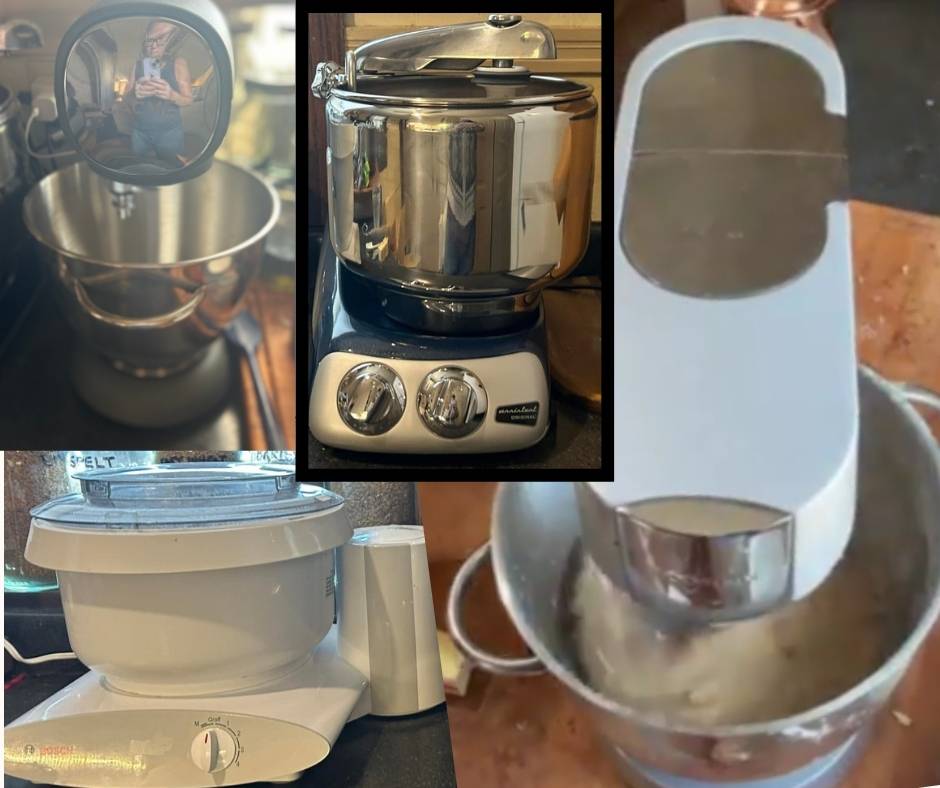
The Best Mixers for Fresh-Milled Bread (What Actually Works)
Why Fresh-Milled Flour Exposes Weak Mixers
Fresh-milled flour is the ultimate stress test for a mixer.
Compared to bagged flour, it:
Absorbs significantly more water
Requires longer gluten development
Creates more friction and heat
Contains bran and germ that actively fight gluten formation
A mixer that “handles dough” with bagged flour may fail completely with fresh-milled dough. That’s not user error—it’s physics.
The #1 Thing No One Talks About: Motor Placement
Mixer performance has far more to do with motor placement than brand name or price tag.
Top-Mounted Motor Mixers
(Motor above the bowl)
These mixers:
Disperse heat more efficiently
Tolerate higher mixing speeds
Handle high-hydration dough better
Can often replace rest periods with speed
This is why they shine with fresh-milled bread.
Bottom-Mounted Motor Mixers
(Motor under the bowl)
These mixers:
Trap heat in the dough
Require cold ingredients
Must use rest periods to avoid overheating the dough
Are not bad—just different
With fresh-milled flour, technique matters more than power.
Mixers That Consistently Perform Well
These mixers handle fresh-milled dough without drama.
Hands down, the most impressive performance I’ve seen.
Extremely fast gluten development
Handles very high hydration with ease
Produces a beautiful windowpane quickly
Excellent value for the price
If speed, strength, and consistency matter—this one is unmatched.
Kenwood Titanium Major
A true workhorse.
Excellent torque
Stable at higher speeds
Handles large batches well
Reliable with fresh-milled dough
A solid choice if you want power without influencer hype.
KitchenAid Professional (Not Artisan)
Important distinction here.
Professional line performs well
Artisan models struggle with fresh-milled dough
Can replace rest with speed in many recipes
If you already own one, you’re in good shape—just skip the lighter models.
Note: if you MUST use an Artisan model KitchenAid mixer, mix for 3 minutes and let the dough rest for 15-30 minutes before mixing again. It will help you get there faster. OR start by mixing with your whisk JUST UNTIL the dough starts to climb the whisk. Then switch to the dough hook.
Bosch Compact (MUM4)
this mixer is super lightweight
the motor isn't under the dough
excellent for travel
I would buy this model over and over again for friends!
UK friends, the MUM5 or MUM6 Stand Mixer is what you want!
Vintage Sunbeam Mixmaster (Rotating Bowl)
Quietly excellent.
Gentle but effective kneading
Surprisingly strong gluten development
Proof that good design outlasts trends
Bread doesn’t care how old your mixer is. These can be found in grandma's kitchen, at yard sales, thrift stores, etc. Just make sure it comes with true dough hooks (that end at the bottom of the hook). There are no replacement parts for these mixers, though, so buy and save up for a Zacme.
Mixers That Require Adjustments (Not Bad—Just Different)
These mixers can make beautiful fresh-milled bread—but only if you work with them correctly.
Ankarsrum, Bosch Universal Plus, NutriMill Artiste
Bottom-mounted motor mixers require intentional technique:
Use cold liquid
Use cold flour
Rest is required
Avoid extended high-speed mixing
Skipping the rest with these mixers will overheat the dough and damage gluten—no exceptions.
Where Influencer Reviews Go Wrong
Most mixer reviews:
Use bagged flour
Test short mixing times
Ignore dough temperature
Never test high hydration
Are sponsored
Fresh-milled flour exposes:
Plastic internal components
Weak gearing
Poor heat management
Quiet doesn’t mean strong.
Expensive doesn’t mean durable.
Pretty doesn’t mean capable.
What I Won’t Recommend (And Why)
I won’t recommend mixers built around:
Plastic drive components (on brand new mixers)
Luxury pricing without performance that meets my needs
Branding over engineering
Paying a premium for plastic internals is not a win—especially for bread.
How to Choose the Right Mixer for You
Ask yourself:
Do I want speed or patience?
Will I bake high-hydration dough regularly?
Am I willing to chill ingredients and rest dough?
Simple Rules
Fresh-milled dough needs strength and heat control
Top-mounted motors favor speed
Bottom-mounted motors demand rests
You don’t need the most expensive mixer
You do need the right tool
Final Thoughts
The best mixer is the one that:
Doesn’t fight your dough
Doesn’t overheat it
Doesn’t need excuses
Fresh-milled flour is honest.
Your mixer should be too.
Everything gets better when you just mill it.
Read More
Mixing & Kneading Bread DoughThe Fresh Milled Bread MethodEquipment
Appliances Mixers
- Ankarsrum Mixer
- Bosch Universal PlusLarge capacityUse code JUSTMILLIT
- Nutrimill ArtisteUse code JUSTMILLIT
- Zacme 5 qt mixer
- Zacme 7 qt mixer
- Zacme 8 qt mixer
Join our Online Community
Ready to ditch recipes and learn more about baking with fresh milled flour using methods and your imagination? Join my Fresh milled Flour Methods group. You can ask questions, share your wins, and more with an expectation of honesty and friendly interaction. I hear it’s the best place to be on Facebook.