
Coconut Palm Sugar: A Smarter Sugar Swap for Baking
Coconut palm sugar is a natural sweetener that’s gained popularity as an alternative to refined sugar — and for good reason. It offers a deeper, caramel-like flavor, retains naturally occurring nutrients, and behaves differently in the body than highly refined sugars.
If you’re baking with whole foods and freshly milled flour, coconut palm sugar can be a simple, practical upgrade without complicating your recipes or your life.
This guide walks you through:
what coconut palm sugar is
how it’s made
how it affects blood sugar (the right way to think about it)
and how to use it successfully in baking
What Is Coconut Palm Sugar?
Coconut palm sugar is made from the sap of coconut palm flower buds. The sap is collected, gently heated to evaporate water, and allowed to crystallize.
That’s it.
No bleaching.
No chemical processing.
No stripping nutrients to make it shelf-stable.
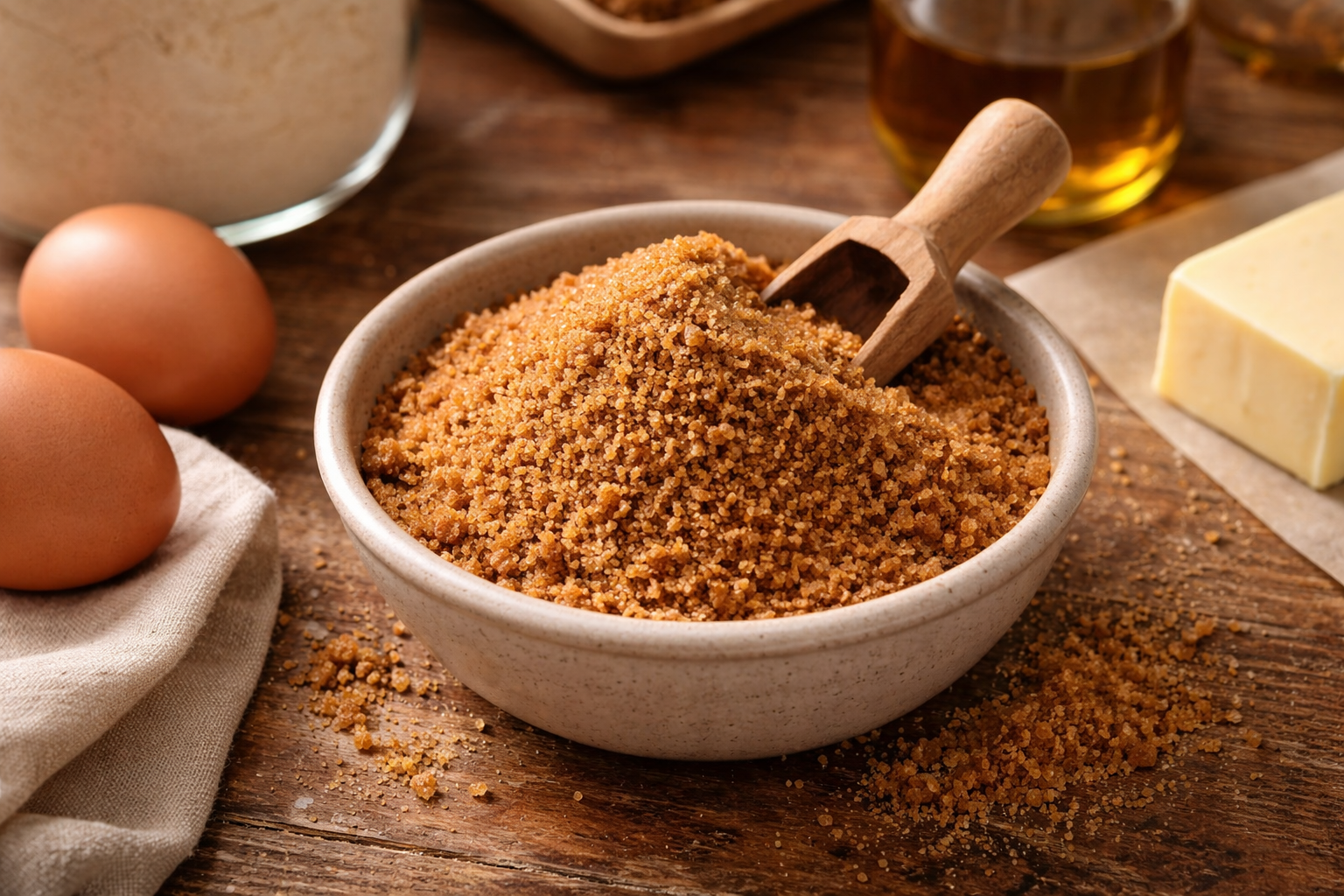
Visually, it resembles brown sugar. Flavor-wise, it leans toward caramel, butterscotch, and mild toffee — which makes it especially good in baked goods.
Coconut Palm Sugar vs. Refined Sugar
The biggest difference isn’t just flavor — it’s processing.
Coconut Palm Sugar
minimally processed
retains trace minerals, fiber, and plant compounds
slower sugar release in the bloodstream
Refined White Sugar
heavily processed
nutrients removed
sugars enter the bloodstream rapidly
This difference matters when we talk about blood sugar response.
How Glycemic Load Actually Works (and Why It Matters)
Glycemic load (GL) is more useful than glycemic index because it reflects how sugars behave in the bloodstream, not just how fast a food can raise blood sugar in isolation.
While glycemic index measures speed alone, glycemic load accounts for the presence of fiber and other naturally occurring compounds in the food that slow sugar absorption. These components affect how quickly glucose enters the bloodstream and how large that rise actually is.
This is why:
A food can have a high glycemic index yet still be metabolically reasonable
If its glycemic load is low, the sugars are released gradually, not all at once
In whole foods, fiber, minerals, and plant compounds act as natural “buffers,” slowing digestion and moderating blood sugar response.
Glycemic Load and Coconut Palm Sugar
Coconut palm sugar contains naturally occurring fiber (notably inulin) and trace nutrients that slow the release of sugars, resulting in a lower glycemic load compared to refined white sugar.
This does not mean coconut palm sugar does not affect blood sugar — it does.
What it means is that:
sugars enter the bloodstream more slowly
the rise is typically less abrupt
it behaves differently than refined sugar that has been stripped of fiber and nutrients
That slower release is what makes glycemic load a more meaningful measure than glycemic index when discussing real food.
Nutrients Retained in Coconut Palm Sugar
Unlike refined sugar, coconut palm sugar retains small but meaningful amounts of:
Minerals: potassium, calcium, iron, zinc
B vitamins: involved in energy metabolism
Antioxidants
Inulin: a prebiotic fiber that supports gut health
These compounds don’t make it a health food — but they do change how it functions in the body and in baking.
Baking With Coconut Palm Sugar (and Sucanat)
This is where coconut palm sugar really shines.
Coconut palm sugar swaps 1:1 for white sugar in most recipes.
It also pairs beautifully with Sucanat, which swaps 1:1 for brown sugar. Together, they cover nearly all traditional baking needs without additional math or reformulation.
Because of its flavor intensity, many bakers naturally find they can reduce total sugar slightly and still get excellent results.
Final Thoughts
Coconut palm sugar isn’t magic — and it isn’t meant to be.
It’s simply a better-aligned choice for closer-to-the-source baking:
fewer processing steps
better blood sugar behavior
richer flavor
no recipe gymnastics
If you’re already milling your own flour, this is a natural next step toward baking that nourishes and tastes good.
Related Articles
Beginner’s Fresh-Milled Bread DoughHoney as a Sugar SubstituteYacón syrup as a Sugar Substitute in BakingJoin our Online Community
Ready to ditch recipes and learn more about baking with fresh milled flour using methods and your imagination? Join my Fresh milled Flour Methods group. You can ask questions, share your wins, and more with an expectation of honesty and friendly interaction. I hear it’s the best place to be on Facebook.