
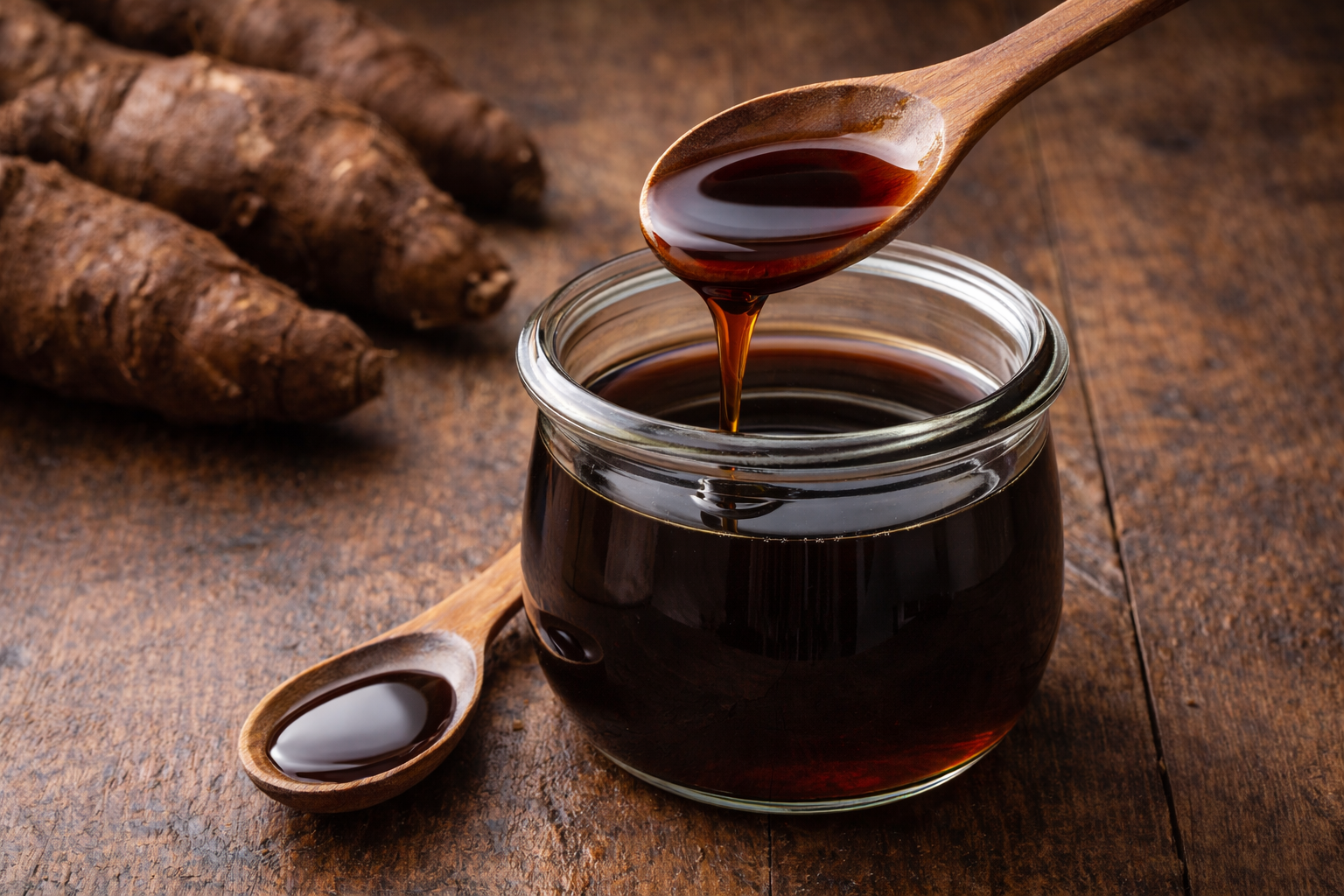
Yacón Syrup: A Natural Sweetener with Prebiotic Benefits
Yacón syrup is a low-calorie liquid sweetener best known for its prebiotic fiber content and gentle blood sugar impact. It has a deep, caramel-like flavor and works well as a substitute for refined sugar in baking—when you understand how it behaves.
This guide covers what yacón syrup is, how it tastes, how to substitute it properly, and why it’s often better tolerated than refined sugar.
What Is Yacón Syrup?
Yacón syrup is made from the roots of the yacón plant, a tuber traditionally grown in the Andes Mountains of South America. The roots are pressed to extract juice, which is gently heated and concentrated—similar in process to maple syrup.
What makes yacón unique isn’t just sweetness. Most of its carbohydrates come from fructooligosaccharides (FOS)—a type of soluble fiber that isn’t fully digested.
Why Avoid Refined Sugar?
Refined sugar is heavily processed and stripped of its original structure. When consumed, it delivers glucose rapidly and without the buffering effect of fiber or micronutrients.
If you want a deeper look at why many bakers are moving away from refined sugar, this article breaks it down clearly:
👉 Why Choose Natural Alternatives to Refined Sugar
A Brief History of Yacón
For centuries, yacón roots were eaten fresh by indigenous Andean cultures for their naturally sweet, juicy flesh. The syrup came later, but its use as both food and medicine long predates modern nutrition research.
Today, science is finally catching up to what traditional cultures already knew.
Flavor Profile
Yacón syrup has a mild caramel or molasses-like flavor, but without bitterness. It’s less sweet than white sugar and more rounded in taste, making it especially good in:
Spiced baked goods
Gingerbread-style recipes
Chocolate
Quick breads and muffins
How to Substitute Yacón Syrup in Baking
You don’t need to fear the math—but I’ll give it to you anyway 😉
White Sugar
Use 70% yacón syrup by weight
Increase flour by 25% to balance moisture
Brown Sugar
Use 65% yacón syrup
Increase flour by 20%
Powdered Sugar
Use 55% yacón syrup
Increase flour by 15%
Example
Original recipe:
100 g sugar
200 g flour
Converted (white sugar):
70 g yacón syrup
250 g flour
Baking & Leavening Adjustments
Lower oven temperature by 25°F to prevent over-browning
Add ¼ teaspoon baking soda per cup of yacón syrup to balance acidity
Practical Tips for Best Results
Liquid matters: Yacón syrup adds moisture—adjust other liquids if needed
Sweetness is gentler: Taste your batter; you may need slightly more
Flavor pairings: Cinnamon, nutmeg, ginger, cocoa
Storage: Keep at room temperature; refrigeration can cause crystallization
Health Benefits of Yacón Syrup (Without the Hype)
Minimal blood sugar impact
Yacón syrup doesn’t behave like sugar in the bloodstream because much of it is fiber, not digestible carbohydrate.Prebiotic support
Its FOS content feeds beneficial gut bacteria, supporting digestive health.Lower calorie density
Because it isn’t fully absorbed, it provides sweetness with fewer metabolizable calories.
This is why yacón syrup is often better tolerated by people managing blood sugar—not because it’s “magic,” but because it behaves differently in the body.
Where to buy Yacón Syrup
Related Reading
Beginner’s Fresh-Milled Bread DoughGuide to GrainsNatural Sugar Substitutes in BakingJoin our Online Community
Ready to ditch recipes and learn more about baking with fresh milled flour using methods and your imagination? Join my Fresh milled Flour Methods group. You can ask questions, share your wins, and more with an expectation of honesty and friendly interaction. I hear it’s the best place to be on Facebook.