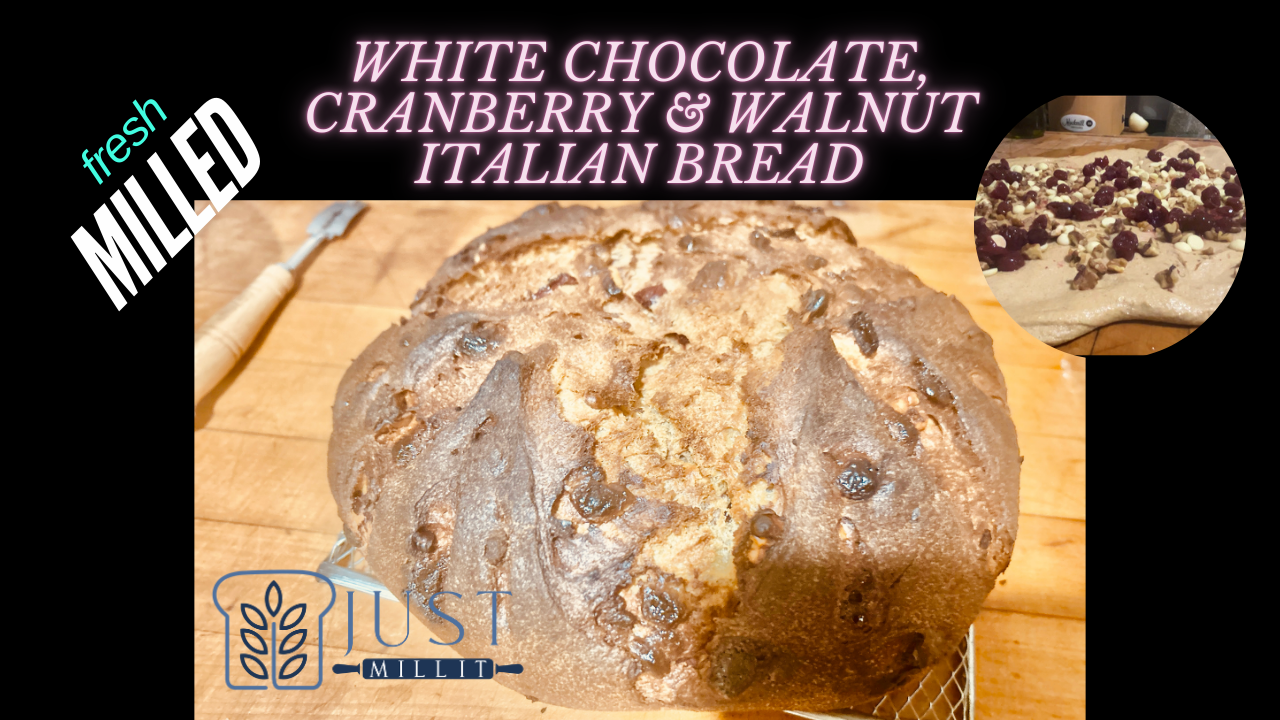
4 Grain Italian Bread from Hydration Test
Learn how to test the hydration percentage of your flour, and bake a loaf of bread with it. Do NOT follow my water amounts in this recipe - it is an exercise in learning the IDEAL hydration for the grains you have in your kitchen. They will vary batch to batch. It's also a great way to learn how to make bread and hydrate the flour without a mixer.
Recommended Pan
Batch Details
Hydration: 87.5%
Total dough weight: 864 g
Portions
Scale by
Ingredients
- 100 g wheat berries, hard (Red Fife)
- 100 g wheat berries, hard (Rouge de Bordeaux)
- 100 g wheat berries, Spelt
- 100 g wheat berries, Khorasan (Kamut)
- 368 g water, cold (this was the amount of water used in MY experiment) yours will vary.)
- 8 g sea salt
- 8 g lemon, juice (or other citrus juice)
- 80 g sourdough starter, stiff (I didn't measure - one big scoop 80-100 grams guess)
Directions
-
Mill 100 grams of each type of grain into it's own container with room for mixing
-
Start by adding 68 grams of water to each jar, and mix the flour with the water. Write that number down on paper. Observe the mixture in the jar. Does it look dry? If so go to the next step.
-
Add 5 grams of water to the jar, write down how much water you added, and mix together well.
-
Observe the mixture in the jar, does it look dry at all? If so, go back to the previous step.
-
Take it out and play with the dough: Notice if it's strong, and elastic. Do the windowpane test. Does it fall apart when you try? If so move on to the next step. If the dough feels dry in some places, go back 2 steps.
-
If the dough fell apart, your ideal hydration is the amount of water added to the dough BEFORE this last increase of water. If the dough feels fully hydrated and did not fall apart - your ideal hydration is the total amount of water in the jar.
-
Mixing the Bread:
-
Add all the dough to your mixing bowl, and add the salt, lemon juice, yeast (if using) and sourdough starter. Knead with your hands until well combined, or use your stand mixer to combine the ingredients. The dough should be smooth, shiny and have an incredible window pane.
-
Transfer the dough into an oiled bowl with plenty of room to rise and a lid.
-
Do your first set of stretch and folds in a 2.5 quart mixing bowl to help develop structure in your dough.
-
When the dough rises by 50%, shape the dough and place it into a bread pan (greased or lined).
-
Preheat the oven to 450 F.
-
Bake the bread in your bread pan, covered with a second pan turned upside down for 30 minutes.
-
Check the temperature of the absolute middle of the loaf, and remove from the oven if 190 F or above.
-
If not to temp, bake another 10-15 minutes without the lid and re-check the temperature of the dough. We are aiming for anything in the 190 - 209 F range.
-
When bread has reached the ideal temperature, remove the bread from the oven, and from the pan it baked in (if using a dutch oven).
-
Place the bread gently on a cooling rack with air flow all around the loaf for 3 hours.
I Made This!
Share your bake and be the first to show it off.
Recipes From This Base
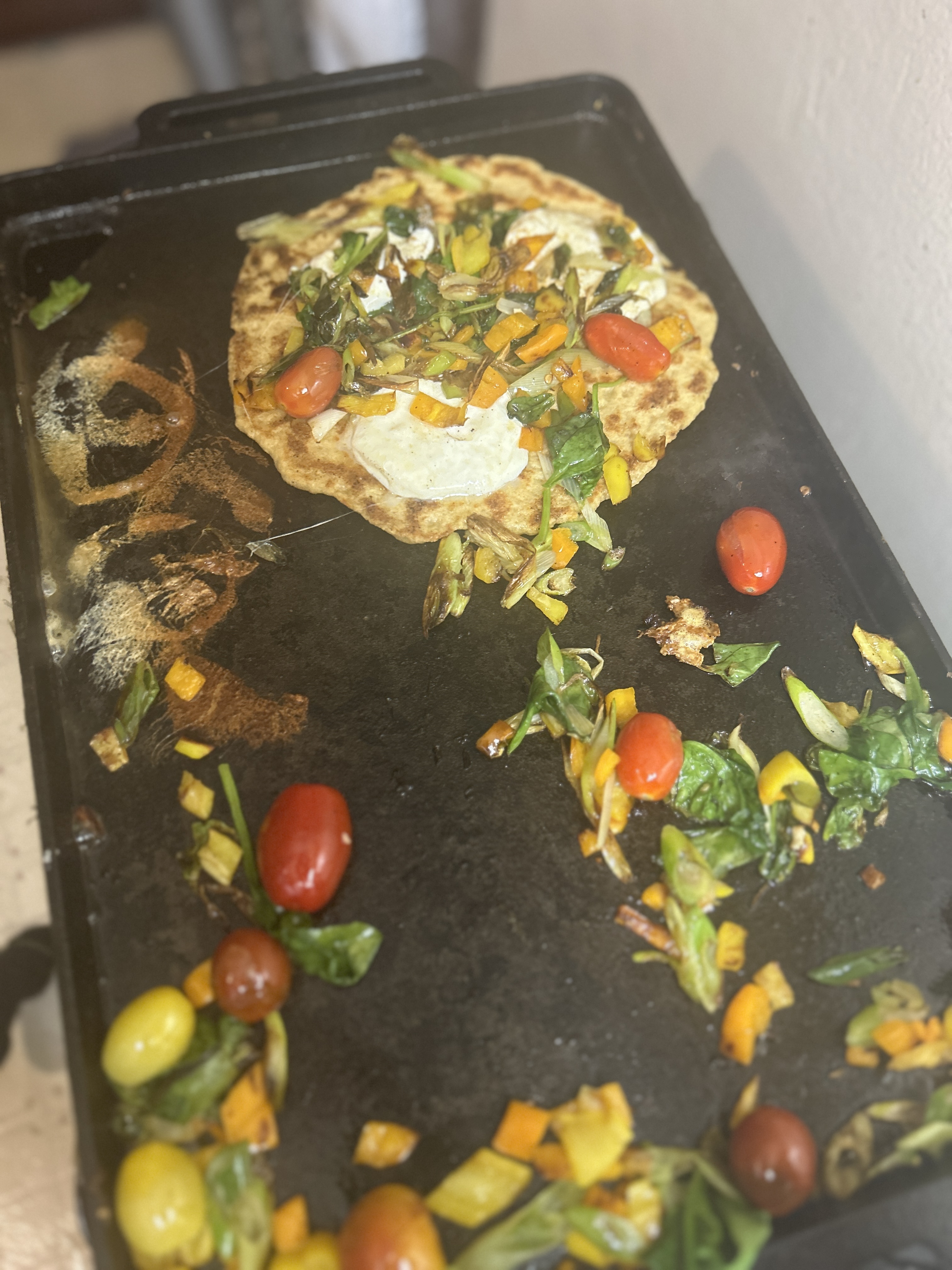
100% Spelt Hybrid Sourdough Burger Buns
I take the Italian bread base and lower the hydration (liquid), add an egg, and use a mixture of sourdough starter and yeast for improved flavor and a slower rise. Download PDF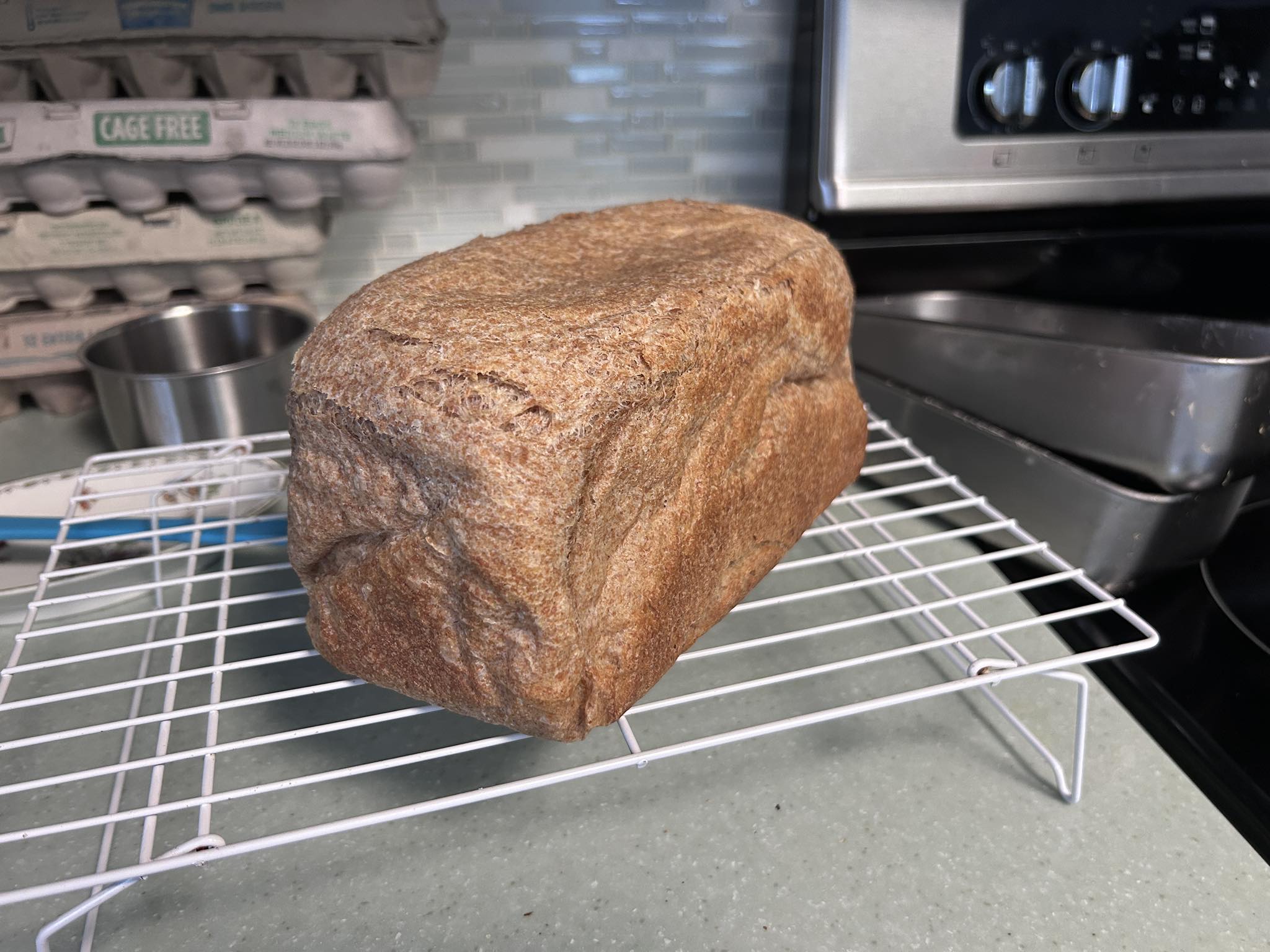
100% Spelt Italian Bread, whole grain
Makes: 1 loaf / 16 slicesPrep Time: 1 hour 25 minutes (mostly inactive)Bake Time: 50 minutesTotal Time: 2 hours 15 minutes Download PDF
4 Grain Italian Bread from Hydration Test
Learn how to test the hydration percentage of your flour, and bake a loaf of bread with it. Do NOT follow my water amounts in this recipe - it is an exercise in learning the IDEAL hydration for the grains you have in your kitchen. They will vary batch to batch. It's also a great way to learn how to make bread and hydrate the flour without a mixer. Download PDF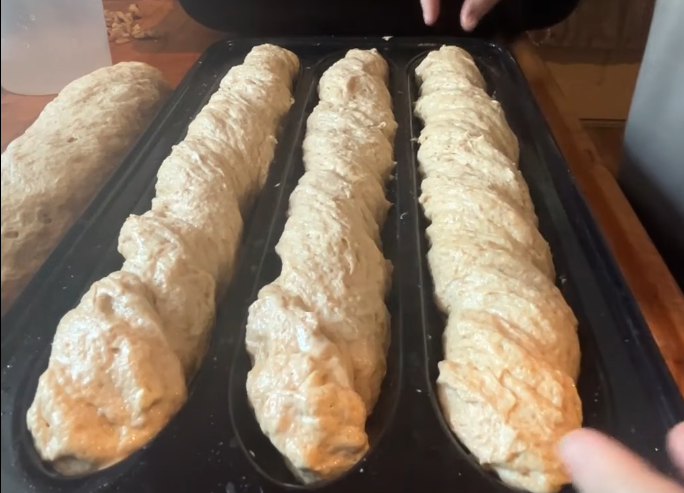
Ancient Grain Baguettes - Fresh Milled
These are crusty on the outside, and perfection on the inside. Using Kamut, Einkhorn, and Spelt - the flavors are out of this world! Download PDF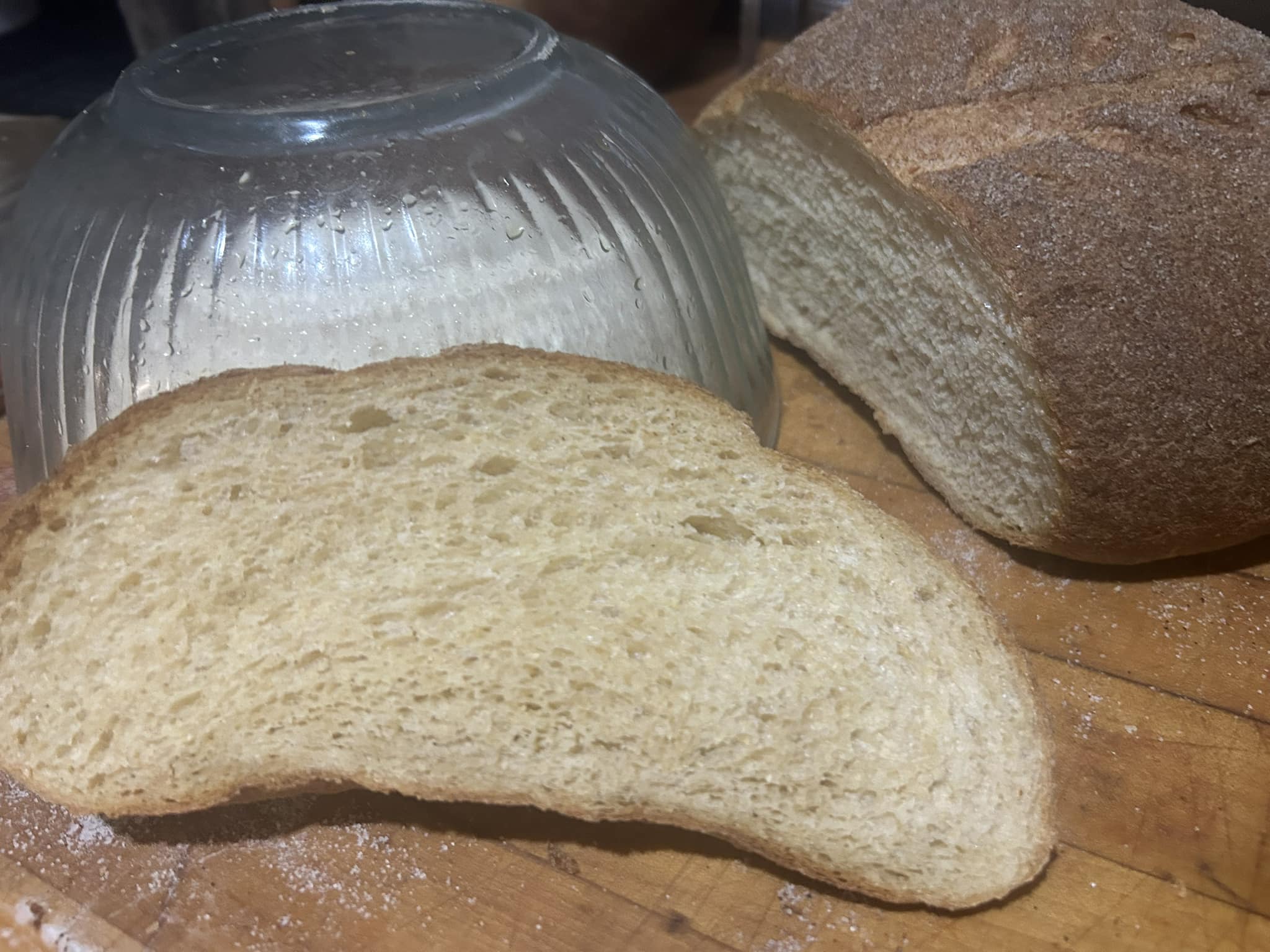
Crusty Whole Wheat Italian Bread with NO ADDITIVES
Rustic whole wheat Italian bread, for the best big holes. This is wet enough to develop gluten with wire whips or the roller and scraper on the Ankarsrum, at highest speed, to develop gluten before switching to the dough hook (if using whisks). KitchenAid friendly recipe Download PDF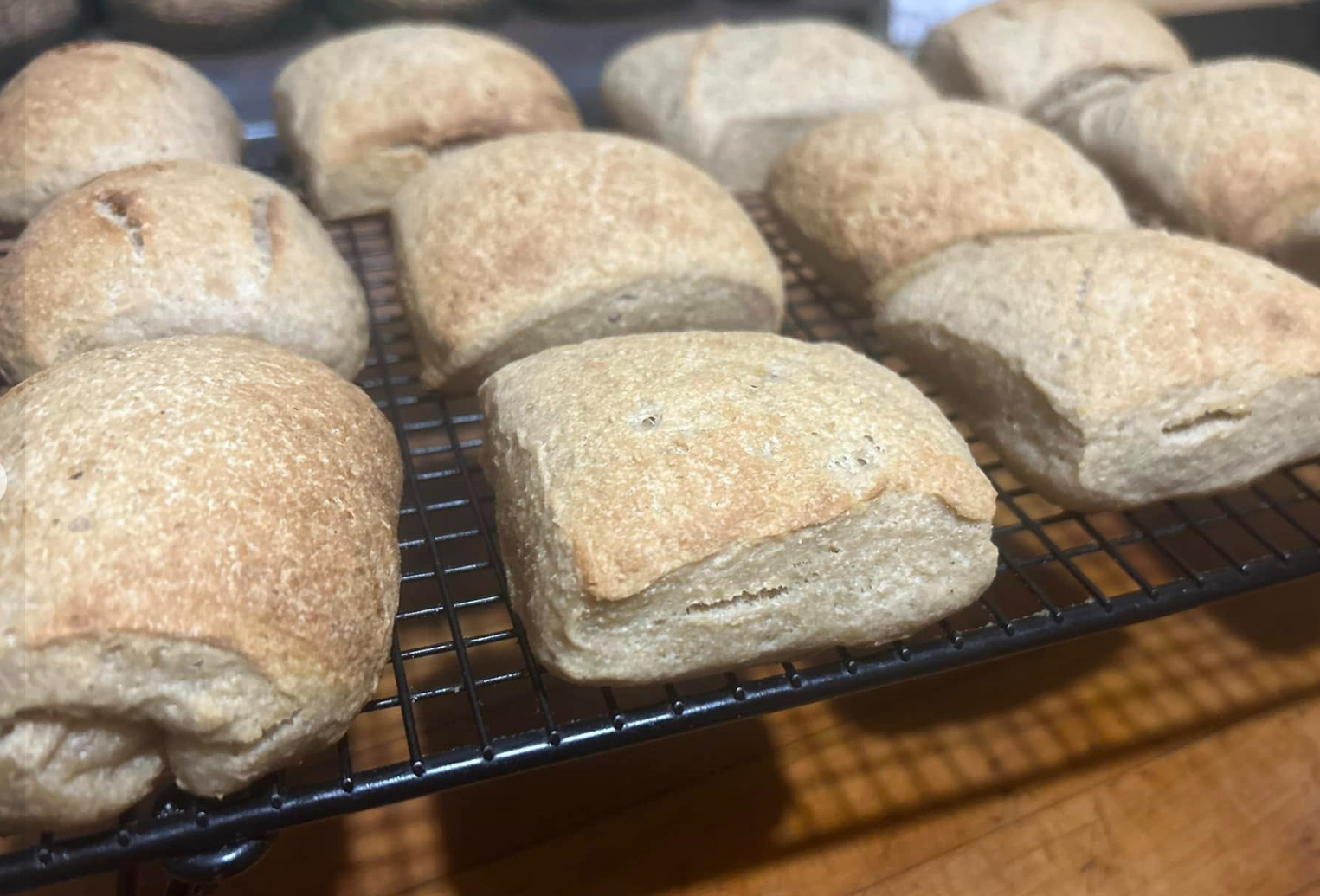
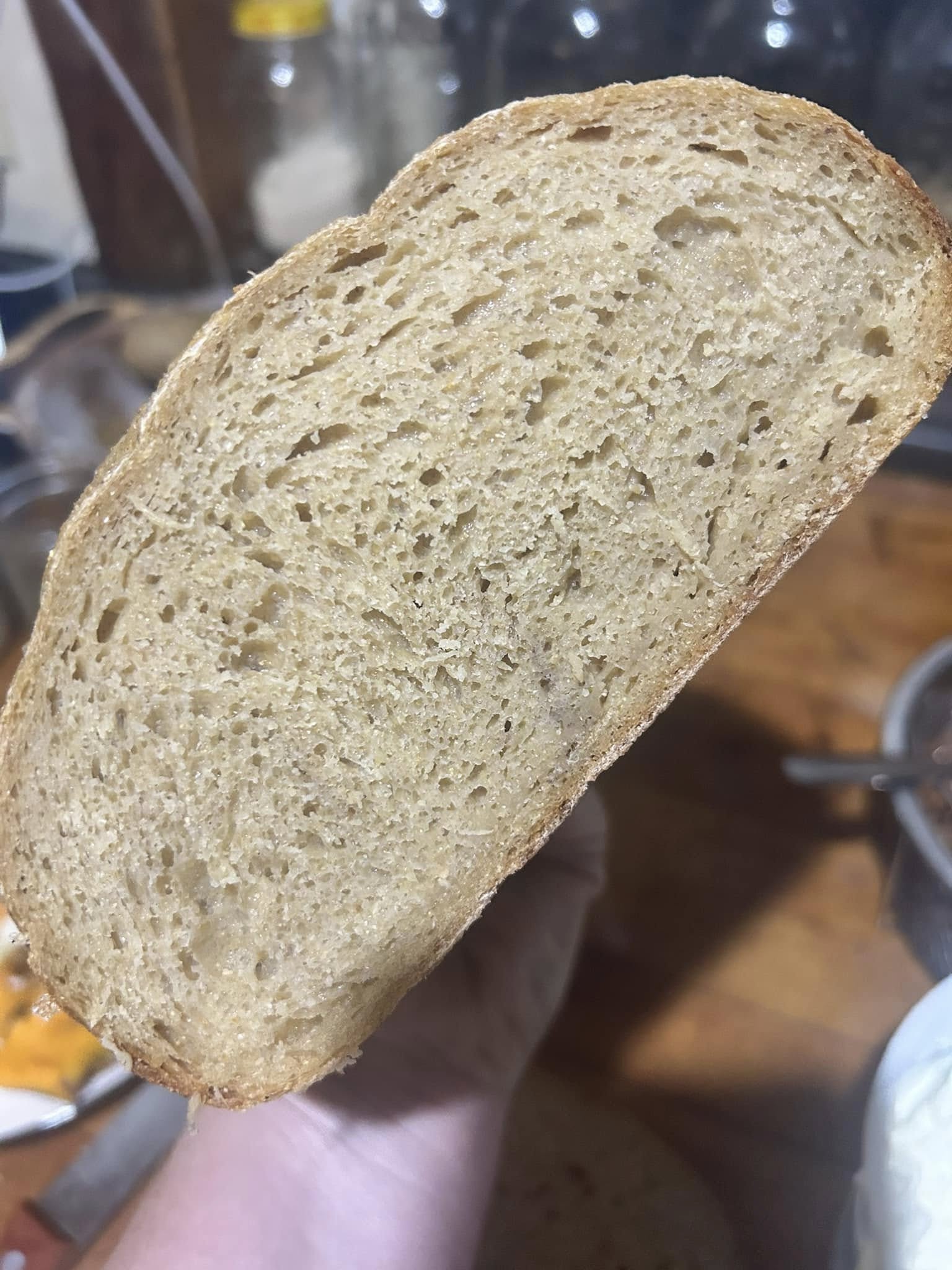
High Hydration Rustic Italian Bread with Whole Wheat Flour
Higher hydration rustic Italian bread, for bigger holes made with whole wheat. This is wet enough to develop gluten with wire whips, or using highest speed roller and scraper on the ank. Download PDF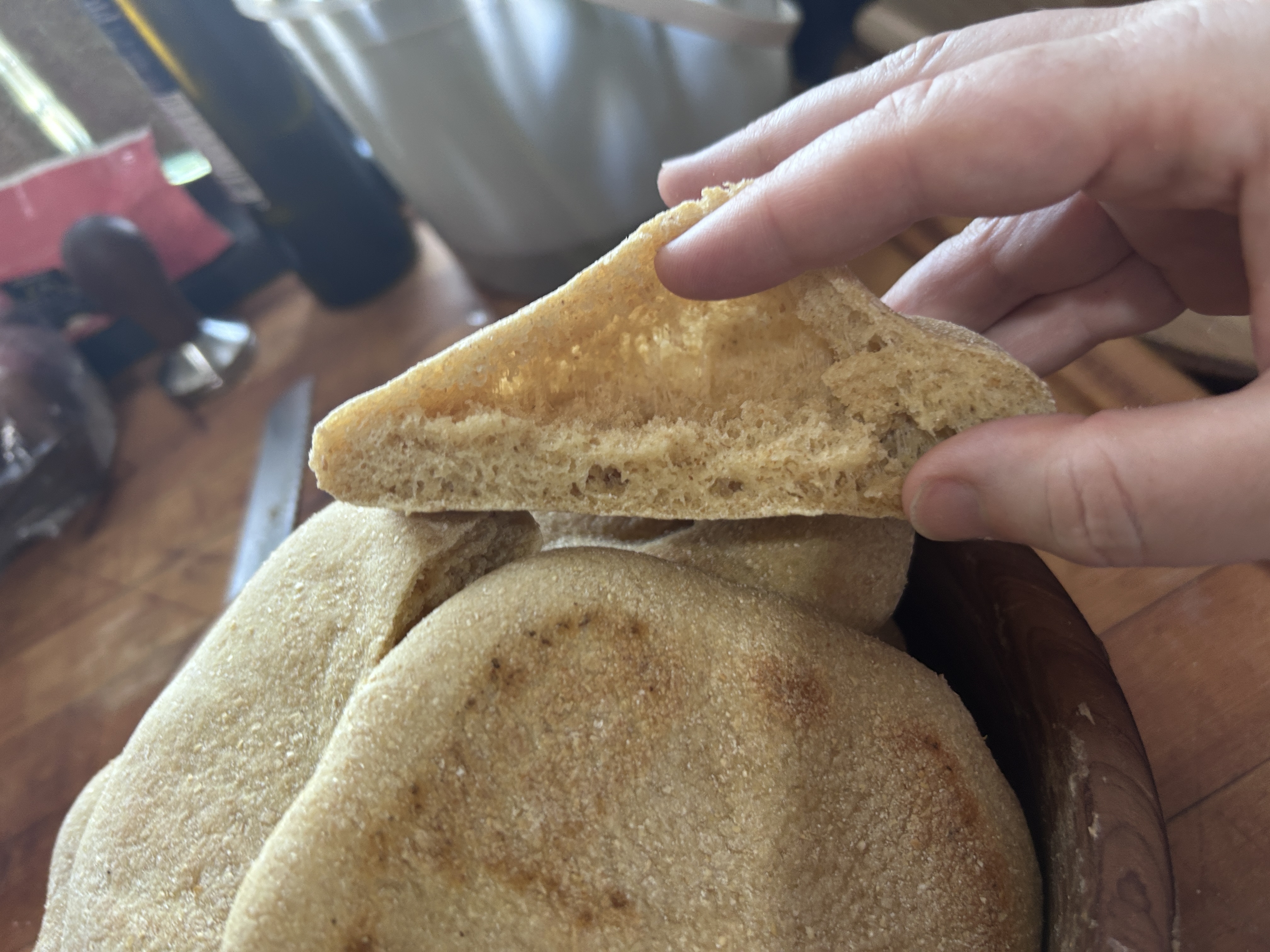
Pita Bread
This is an adaptation of my Italian bread base, but we are using a little more yudane for this batch to up the softness and hold in the moisture, and we enrich the dough while still keeping it vegan with extra virgin olive oil. These puff up so nicely in the oven! Download PDF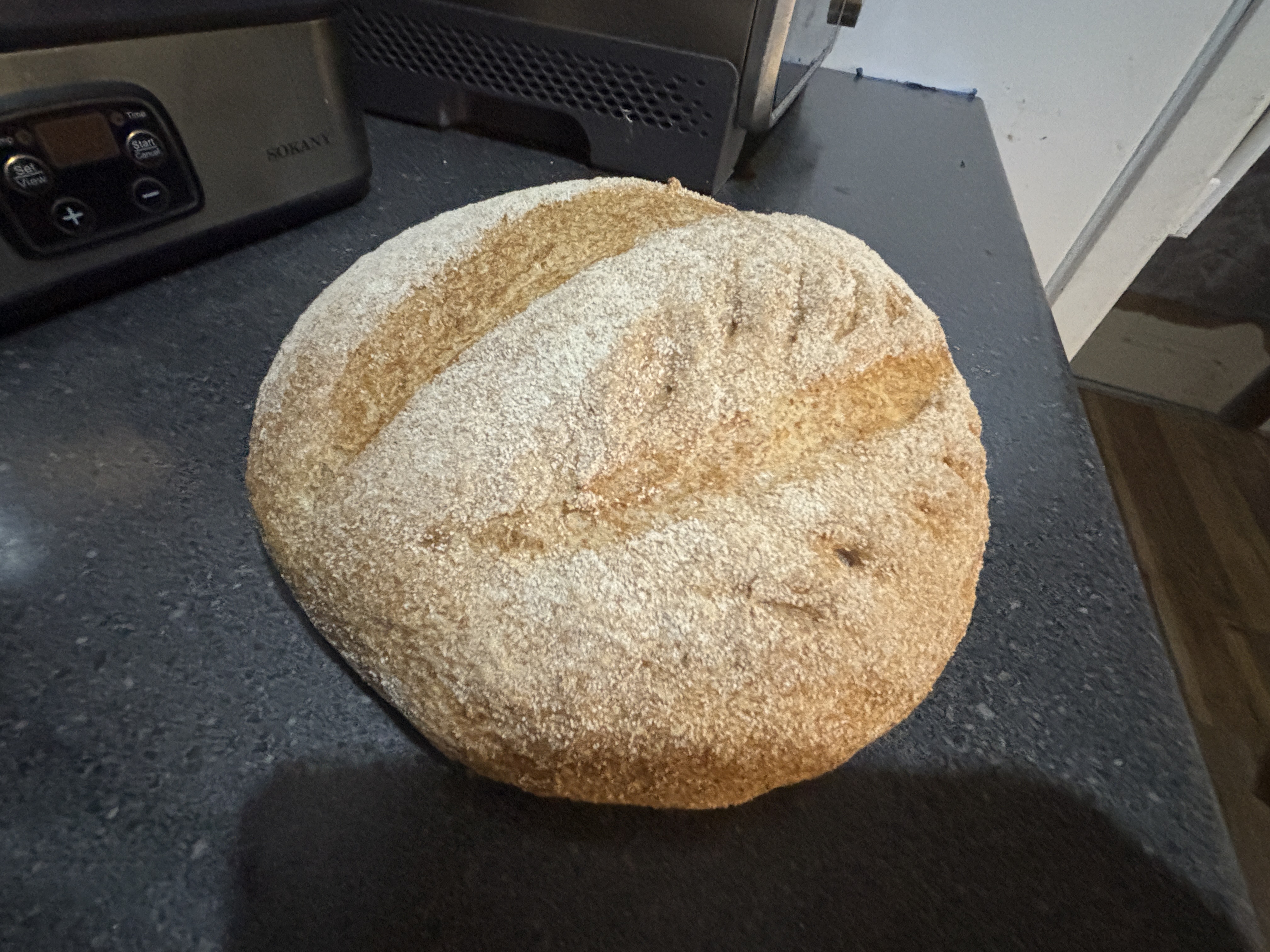
Poor Man's Potato Bread
This is a large loaf of potato bread made without mashed potatoes. Instead, we use the water potatoes were cooked in, cooled, as the liquid in our bread. We can skip yudane method with this recipe since the water will have plenty of gelatinized starch in it. Download PDF
Potato-less Potato Bread - with tofu and honey
This is the same as my Poor Man's Potato bread recipe, but I added a few things: turmeric, tofu, and a drizzle of honey. It counts as an enriched bread since soy has fat in it (and lecithin) and honey counts as a sugar. We open baked this, but of course, it can be baked in a bread pan. I'd use 9x5" Download PDF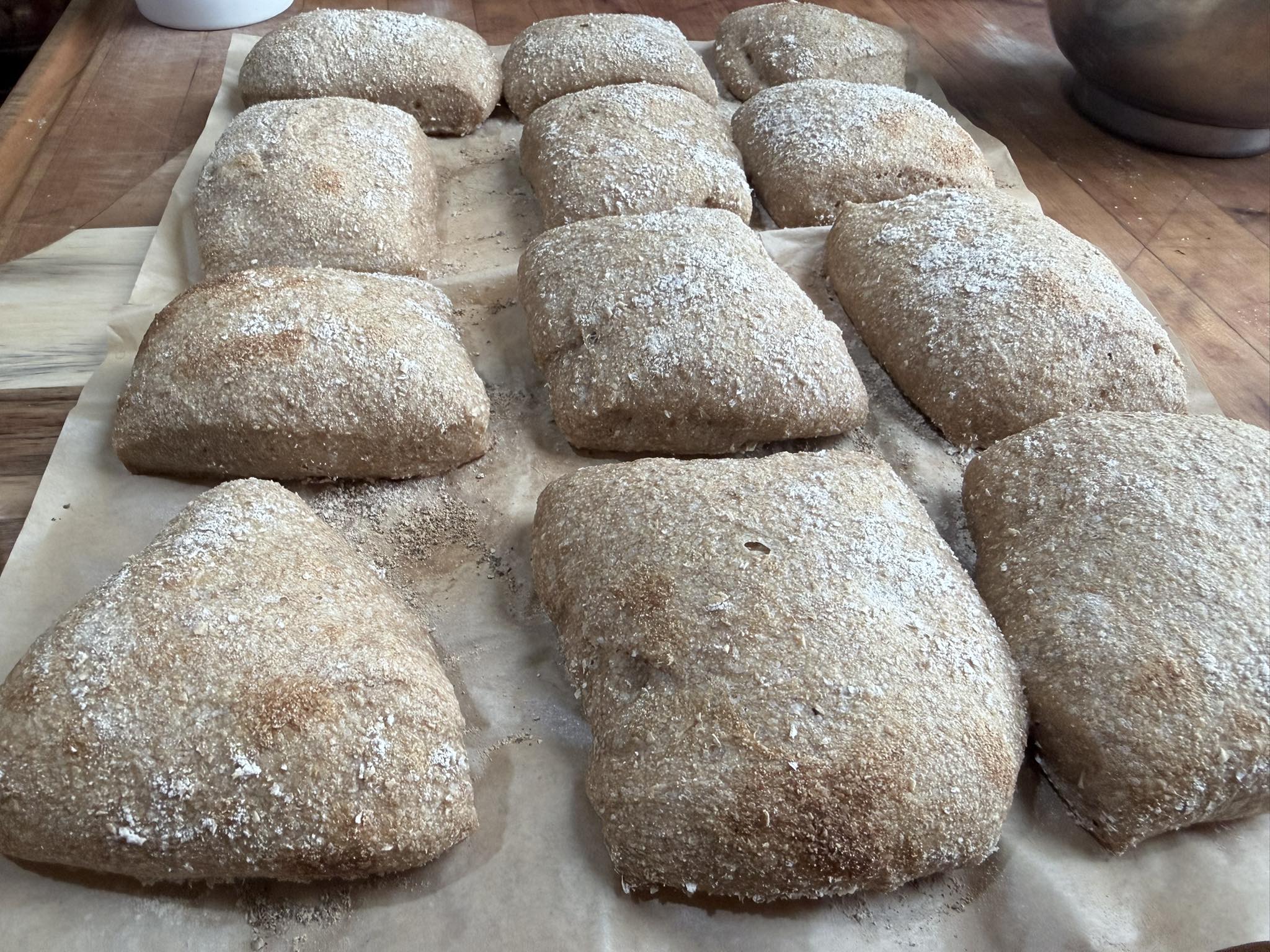
Sourdough Ciabatta & Italian Bread
These are crusty on the outside, and perfection on the inside. Finally made with sourdough instead of commercial yeast. Download PDF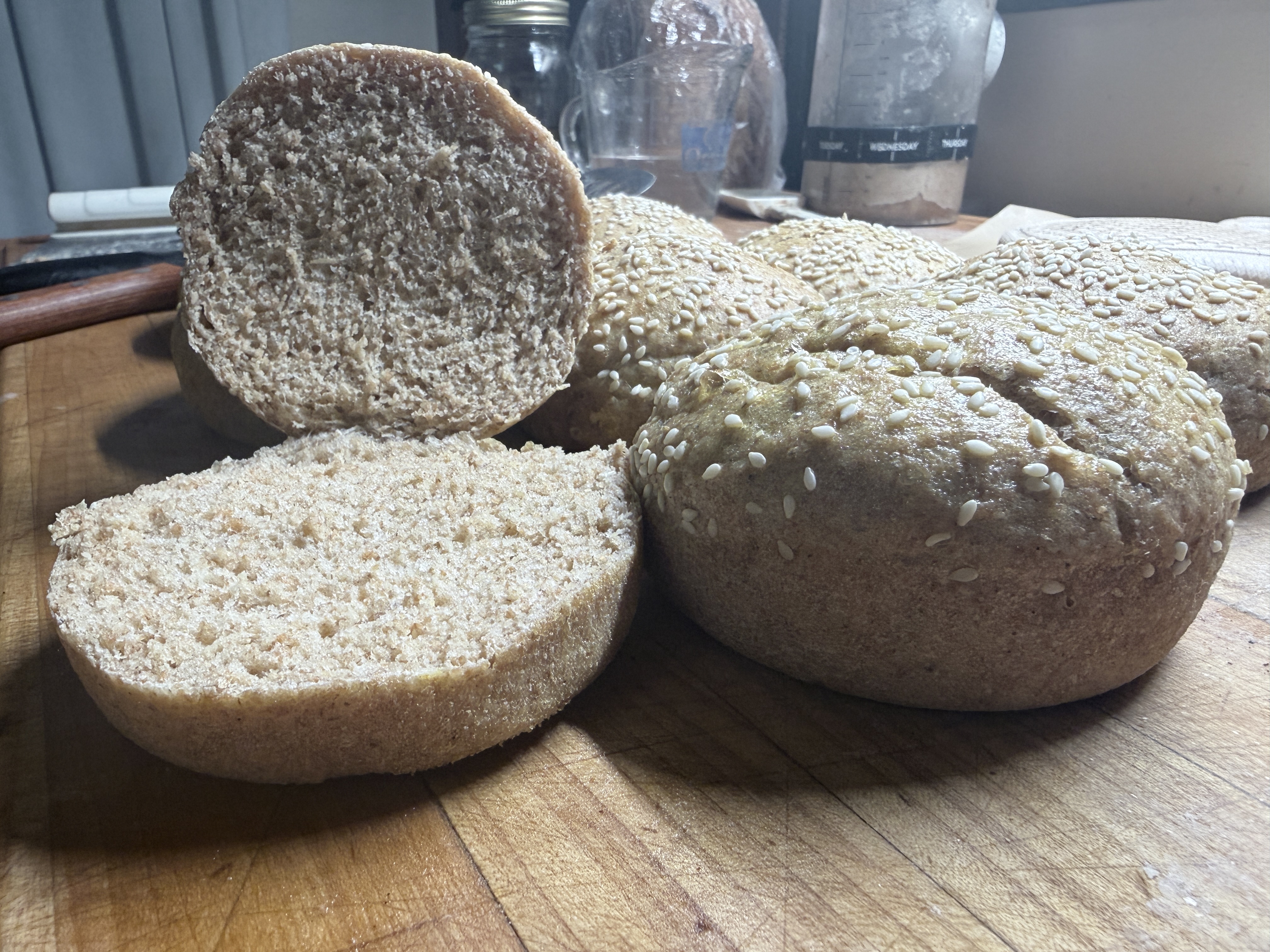
Spelt and Kamut / Durum Burger Buns
For my sister, Maria, who was out of hard wheat and wanted to make some good bread. Thanks for calling so I’d get up and make these. Download PDF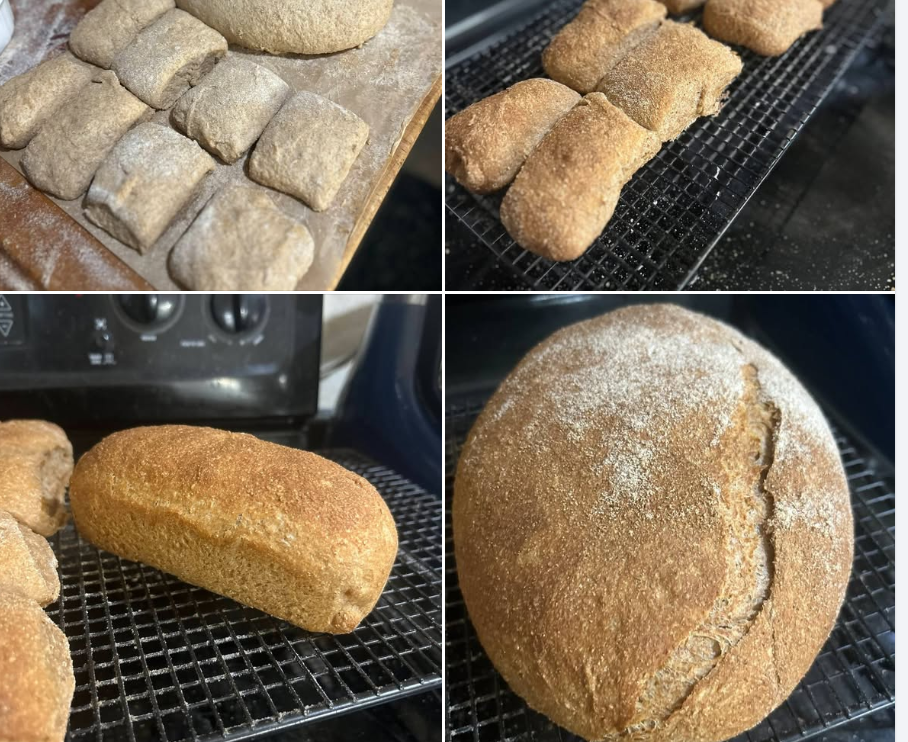
Whisked Italian Bread, Ciabatta Rolls, and English Muffin Loaf
Crusty whole wheat Italian bread, for the best big holes. KitchenAid friendly recipe, follow the video instructions as shown for the Zacme mixer. Download PDF