
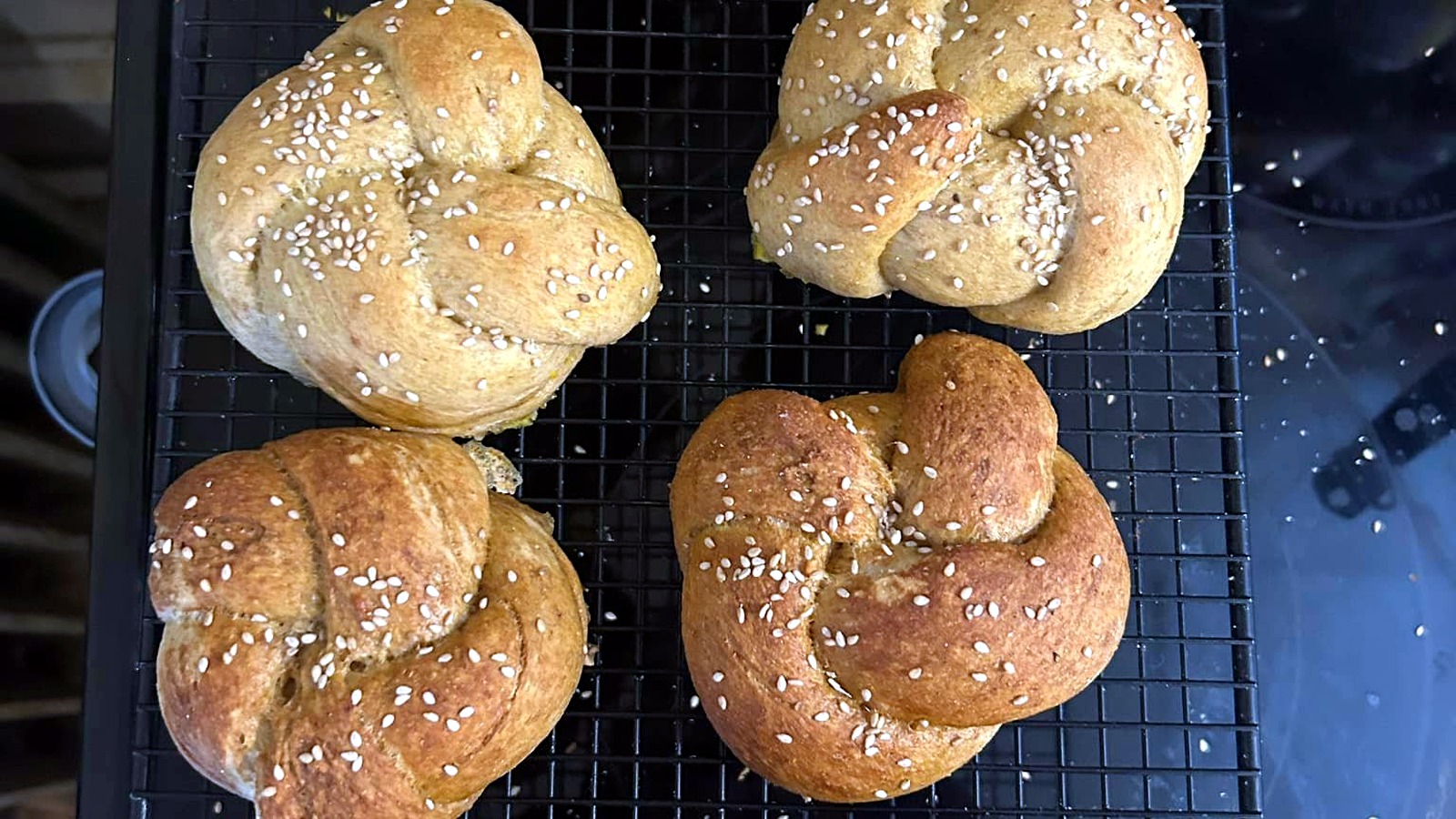
Kaiser Rolls with Fresh Milled Flour
If you’re used to bagged flour recipes, the hydration on these kaiser rolls might make you pause.
This dough sits around 80% hydration, which sounds high — but with fresh milled flour, it behaves exactly like a typical 60–65% hydration dough made with white flour.
That’s the first thing I want you to understand before you start:
this dough should feel normal.
Not loose.
Not sloppy.
Not hard to shape.
Just soft, smooth, and easy to work with.
Why Kaiser Rolls Work So Well with Fresh Milled Flour
Kaiser rolls are almost a lean dough:
mostly flour and water
just a small amount of fat and sugar
strong enough for sandwiches
thin crust with a soft interior
Fresh milled flour changes how hydration works because the bran and germ absorb water slowly over time. That means higher hydration is required to get the same softness and structure you expect from bakery rolls.
If you’ve ever made fresh milled rolls that felt dry or dense, hydration is usually the reason.
What Makes These Different From Dinner Rolls
These are not soft, enriched dinner rolls.
You should expect:
a lightly crisp crust
a structured but tender crumb
enough strength to hold fillings
classic bakery-style chew
They sit right between artisan bread and sandwich rolls — which is exactly what makes kaiser rolls so useful.
The Hydration Reality (Fresh Milled vs Bagged Flour)
This is the part most recipes don’t explain.
With bagged flour:
60–65% hydration = standard roll dough
With fresh milled flour:
that same dough texture happens closer to 78–82% hydration
So if you’ve been nervous about higher numbers, this recipe is a great way to build confidence. The dough will feel familiar once mixed.
About the Yudane
The small yudane in this recipe helps:
hold moisture longer
improve softness
support structure without adding enrichment
It’s a simple step that makes a noticeable difference, especially with whole grain flour.
Shaping Kaiser Rolls
Kaiser rolls are shaped from a long rope of dough and tied into a loose knot. This creates the classic swirl pattern that opens slightly as the rolls bake.
You don’t need a stamp or special tool — just a little practice.
The key is keeping the knot loose enough for expansion during proofing.
See the video on shaping. Practice with play dough before you use real bread dough for confidence building.
Proofing Tip That Matters
These rolls are proofed upside down and flipped before baking.
That small step helps the shape hold and gives better definition once they hit the oven.
Bake Hot — Use Steam
Kaiser rolls benefit from:
high heat
steam at the beginning of baking
Steam keeps the surface flexible so the rolls expand before the crust sets, which helps create that thin, lightly crisp exterior.
What to Expect When They’re Done
You’re looking for:
golden color
light but structured feel
thin crust
soft interior
They’re best the day they’re baked.
If you store them in a bag, the crust will soften — which is normal.
Final Thoughts
The dough handles easily, shapes well, and produces rolls that feel familiar while still giving you the flavor and nutrition of fresh milled grain.
Kaiser Rolls are ALWAYS better when you Just Mill It - Dr. Mel
Join our Online Community
Ready to ditch recipes and learn more about baking with fresh milled flour using methods and your imagination? Join my Fresh milled Flour Methods group. You can ask questions, share your wins, and more with an expectation of honesty and friendly interaction. I hear it’s the best place to be on Facebook.